
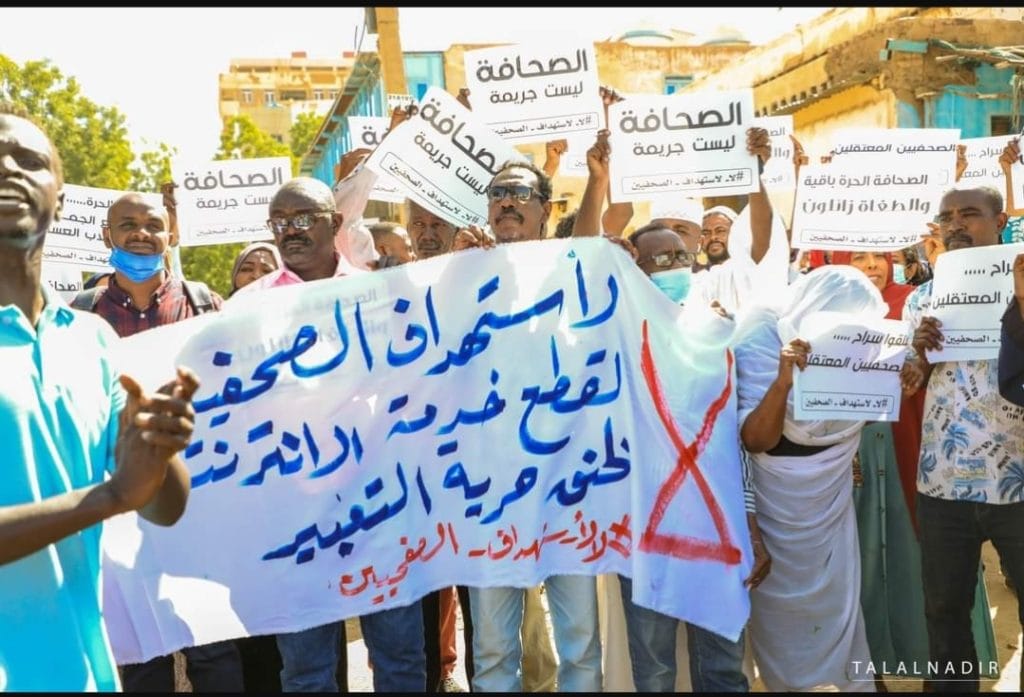
KHARTOUM, August 13, 2025 (Sudan Tribune) – The war that erupted between the Sudanese army and the Rapid Support Forces (RSF) on April 15, 2023, silenced more than 20 of Sudan’s print newspapers. The shutdown plunged the country into an information blackout, obscuring the unfolding reality from the world and leaving hundreds of journalists displaced, unemployed, or forced into menial jobs to survive.
Now, against a backdrop of ruin, the government plans to revive the newspapers.
Sources have revealed to Sudan Tribune that the Khartoum state government is preparing to restart newspaper printing. Meetings were held in July between a state-appointed distributor and several publishers, with Osman Mirghani’s newspaper, Al-Tayar, among the first to signal its readiness to return.
The war’s outbreak had been sudden. On that final morning, newspaper headlines ironically reflected last-ditch peace efforts: “Gibril, Minawi, and Agar Lead Mediation,” one read. They were a testament to a peace that was already lost.
From Pens to Pavements
The scale of the collapse is staggering. Walid al-Nour of the Sudanese Journalists Syndicate confirmed to Sudan Tribune that all 26 print newspapers and five major printing presses ceased operations on the first day. By August 2025, 90% of the country’s 1,500 journalists were out of work.
“Everyone has lost their savings,” al-Nour said. “Some have become street vendors just to feed their families.” Only 5% of journalists—mostly those with international news agencies—are still receiving regular salaries. He sharply criticized the global community for its lack of support, noting that Sudanese journalists have received far less protection and aid than their counterparts in other conflict zones.
Cautious Hope Amid the Ruins
Osman Mirghani, editor-in-chief of Al-Tayar, remains cautiously optimistic. Before the war, he notes, Sudan had nearly 40 newspapers. While the media landscape has shifted online, he says it’s often a one-person operation run from a mobile phone. In contrast, his paper has maintained its professional structure.
Despite losing his headquarters and $400,000 worth of equipment, Mirghani sees a path forward. He points to an army-owned printing press that requires only minor repairs and another that is ready to go. “We have started preparations to return to print,” he confirmed.
The government appears to be moving forward with the plan, which Mirghani and another prominent journalist, al-Sadiq al-Rizeiqi, have been tasked with coordinating. Authorities have reportedly secured printing paper and requested that publishers submit lists of their staff.
The Price of a Paycheck
However, many fear the government’s help will come at the cost of independence. Ashraf Abdelaziz, editor of Al-Jarida, calls a return under these conditions “nearly impossible.” His greatest fear is that the government will pay journalists’ salaries directly.
“If the government pays, it will control the message,” he warned. “Newspapers could be turned into platforms for hate speech and pro-war propaganda, destroying their fundamental role.”
Abdelaziz stressed that the war didn’t just disrupt the press—it “completely obliterated its infrastructure.” Offices were looted, equipment was stolen, and, in a final indignity, “the steel from the printing presses was sold for scrap.”
Unanswered Questions
Abdelmoniem Abu Idris, head of the Sudanese Journalists Syndicate, finds himself in the middle. He supports any plan that gets journalists working again, but points to critical unanswered questions.
“Who will fund these newspapers—the government or the private sector?” he asked. “And how will you create new, fair contracts for journalists whose careers and lives have been destroyed?”
With 90% of the media infrastructure annihilated in the war’s opening days, these questions hang heavy over an industry that wonders if its revival will mean its rebirth or its demise.
This report, prepared by Sudan Tribune, is being published by the Sudan Media Forum to examine the feasibility and implications of the government’s initiative to restart newspaper production. Given the devastation of media infrastructure and the immense suffering of journalists, the report questions how this move will impact the independence and professionalism of the press.


