
Sudan Media Forum
Yousif Hamad
Khartoum, 9 November 2026 (Newsroom) – It is now easy to imagine an entire country without electricity. The war has pushed Sudan back centuries, to a time when its cities and villages had no access to power. Yet the current electricity crisis is not entirely new. It reflects deep-rooted structural failures that have accumulated over decades and become part of everyday life for Sudanese people, before the war compounded their effects and pushed the sector to unprecedented levels of decline.
Even before war broke out between the Sudanese army and the Rapid Support Forces (RSF), electricity generation – already limited and supported by fragile infrastructure – met only around 30% of urban demand, according to an emergency electricity sector plan presented by several experts in 2019. This represented only a fraction of actual needs, while access to electricity in rural areas remained almost non-existent.
These and other policy failures left Sudan dependent on neighbouring countries for electricity imports. However, information about these arrangements remains scarce and unclear, and is subject to changes in political relations.
An electricity supply agreement between Ethiopia and Sudan came into effect in 2013. At certain periods, Ethiopia supplied around 200 megawatts through a double-circuit transmission line. Last December, Sudan’s Ministry of Energy announced that electricity transfers from Ethiopia had been suspended.
With the outbreak of war, energy infrastructure became a direct military target, with facilities increasingly attacked in their own right. This caused extensive damage to the country’s generation, transmission and distribution systems, with losses estimated at hundreds of trillions.
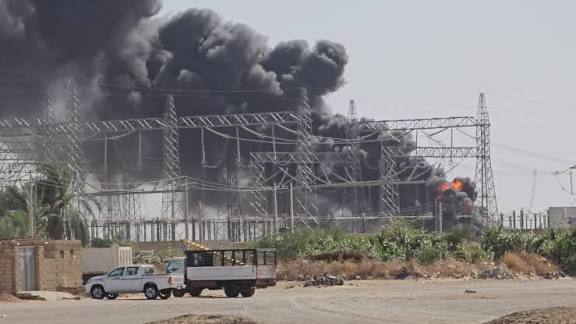
Since late October, at least 15 electricity stations and facilities have been attacked by drones, triggering fires and causing extensive damage. The targets included the Sennar power station in Sennar State; Al Hawata, Al Fao and Mashkour stations in Gedaref State; Al Junayd and Al Managil stations in Al Jazirah State; Al Markhiyat in Omdurman; Umm Dabaker in White Nile State; the Shendi substation; Abu Hamad and Al Dabba in River Nile State; and Haya in Red Sea State.
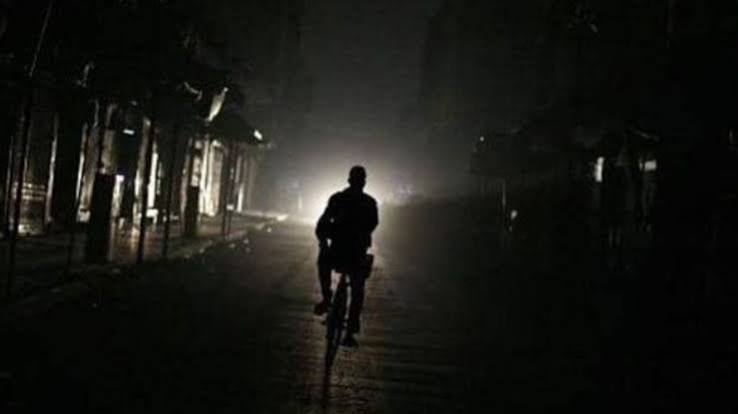
The attacks triggered widespread power cuts, plunging nearly 80% of the country into darkness. Fuel storage facilities in Haya, in Red Sea State, were also targeted, damaging pipelines and further complicating fuel supplies.
At the heart of the crisis is the vulnerability of the country’s transmission and substation infrastructure, compounded by the destruction of power generation facilities. Experts point out that substations such as Al Markhiyat, Al Junayd and Sennar are critical links in the transmission and distribution network. Attacking them can cut off electricity to vast areas, even when generation facilities such as Merowe Dam and Umm Dabaker power station remain capable of producing electricity.
The electricity sector’s vulnerability predates the war and stems from longstanding weaknesses in generation capacity and transmission and distribution networks. Before the fighting began, total available generation capacity did not exceed around 4,000 megawatts. Hydropower from dams at Merowe and Roseires accounted for approximately 60%, while thermal power stations, particularly those in Garri and Khartoum North, supplied the remaining 40%, relying on heavy fuel oil and imported diesel.
Electricity is transmitted through an ageing centralised grid that has failed to provide a reliable supply to states such as Darfur and Kordofan, which are far from major generation and distribution centres. The system relies heavily on a main 500-kilovolt transmission line connecting Merowe to Khartoum, increasing the risk of widespread outages if this key route fails. The network also suffers from technical and commercial losses exceeding 25%.
These structural weaknesses are compounded by a severe economic crisis. Data attributed to the International Monetary Fund (IMF) and published by specialist economic indicators websites suggest that Sudan’s public debt reached approximately 334.4% of gross domestic product in 2026.
In this sense, the war did not create Sudan’s electricity crisis so much as accelerate the sector’s collapse, exposing the depth of problems that had long plagued it. National electricity generation has fallen from around 4,400 megawatts to critically low levels of no more than 1,100 megawatts, or even less, across different areas of control, depriving millions of people of a reliable power supply.
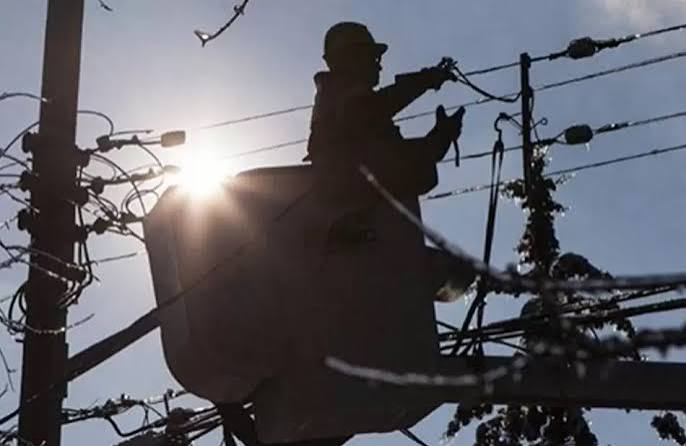
Since the war began in April 2023, the electricity sector has suffered successive blows affecting almost every part of the system. Distribution networks have been damaged by looting, vandalism and attacks on infrastructure. Central control systems have been disrupted, while substations, large transformers and underground cables stretching over long distances have been stolen or destroyed.
Estimates suggest that what remains of the electricity service now operates through isolated power islands, with limited and largely manual operating systems.
The damage is particularly serious because of the essential role energy infrastructure plays in sustaining civilian life and economic activity. Attacks on generation and transmission facilities and substations have gone beyond disrupting electricity supplies, directly affecting people’s lives and essential public services.
Attacks on energy infrastructure, which constitutes civilian objects, violate the protections afforded to such facilities under international humanitarian law. The consequences extend far beyond power cuts in homes, disrupting entire essential sectors. Hospitals, for example, face difficulties storing vaccines and operating medical equipment. Water treatment and pumping stations stop functioning when electricity is cut, while the telecommunications sector has been forced to rely on alternative power sources that are costly and difficult to sustain.
Since the outbreak of war in April 2023, Sudan’s fuel crisis has evolved beyond questions of prices and subsidies into a crisis of supply and production. Damage to oil infrastructure, the disruption of production and refining operations, and growing obstacles to imports and distribution have all contributed to the crisis.
One of the most significant developments affecting supplies of petroleum products was the shutdown of the Khartoum refinery in the Al-Jaili area, north of the capital, after its facilities sustained severe damage. Before the war, the refinery processed around 100,000 barrels a day and met more than 60% of the country’s needs. Its closure has since increased Sudan’s dependence on imports of refined petroleum products.
According to figures from the Ministry of Energy and Oil, Sudan imported approximately 1.38 million tonnes of fuel during the first half of 2026, at a cost of $1.495 billion, accounting for around 33% of the country’s total imports. Diesel alone accounted for imports worth $923 million.
In Khartoum, where daily life is gradually beginning to resume, public transport services are struggling with severe fuel shortages. Cars queue outside petrol stations, with lines sometimes stretching for more than a kilometre. The crisis has been exacerbated by the shutdown of more than 60% of the country’s fuel stations.
The depreciation of the national currency, the closure of the Al-Jaili refinery – once a major centre for domestic oil refining – and growing reliance on imports paid for in scarce foreign currency have driven up fuel costs and reduced availability. The consequences have spread across agriculture, industry and transport, increasing operating costs and adding to the financial pressures on ordinary people.
Amid the electricity and fuel supply crisis, increasing numbers of households, farmers and institutions have turned to solar power as an available alternative for meeting their most basic energy needs. The use of small-scale solar systems has expanded in various parts of the country, particularly for homes and agricultural purposes, including water pumps and small-scale power generation units.
Sudan receives enough solar radiation to generate approximately six kilowatt-hours per square metre per day. Yet successive governments over decades of national rule failed to recognise or capitalise on this potential to expand the country’s use of solar energy. Even so, the high cost of solar panels, batteries and inverters puts this alternative beyond the reach of large sections of the population.
Sudan Media Forum and its member institutions are publishing this report, prepared by the Newsroom, to highlight the extensive destruction inflicted on Sudan’s energy and electricity sector by the war between the Sudanese army and the Rapid Support Forces. The report shows how the country is being pushed back to an era when electricity was unknown in Sudan.


