
By Sabah Mohamed Adam
KHARTOUM, August 23, 2025 (Al-Alq Center for Press Services) – The war in Sudan has decimated the country’s healthcare infrastructure, leading to the destruction or closure of most hospitals and clinics providing essential medical care to women. This collapse has forced countless women, especially those who are pregnant, to give birth in perilous and unsanitary conditions, whether in dilapidated homes or makeshift displacement camps.
Maternal Mortality Skyrockets
“We have seen a dramatic spike in maternal mortality rates and near-fatal events resulting from post-partum haemorrhaging, infections, preeclampsia, and other preventable complications,” said Dr. Sawsan Abdelqayoum, an obstetrician-gynaecologist. “Community midwives and skilled medical staff have themselves been forced to become displaced, fleeing conflict zones to other parts of the country or abroad. This has profoundly exacerbated the crisis, multiplying the burden on women and their children.”
Even in cities considered relatively safe, women face a different set of challenges. A shortage of prenatal and postnatal care services has been caused by the overwhelming pressure on a skeletal health system. For many, access to the few functioning facilities has become nearly impossible, blocked by a wall of insecurity, nonexistent transportation, and crippling costs. Furthermore, women are suffering from a complete breakdown of family planning services, making contraceptives nearly impossible to obtain.
A Vicious Cycle of Violence and Health Risks
For survivors of rape, the situation is even more dire. Most have not received essential medical or psychological treatment due to the difficulty of reaching them and the absence of organized support systems. Many survivors—both female and male—are unwilling to report what they have endured. “The physical and psychological consequences of these violations are devastating,” Dr. Sawsan emphasized. “Pregnancies resulting from rape are often denied the option of a safe abortion, compounding the trauma.”
In addition, women and girls in conflict zones, particularly in displacement camps, face a severe shortage of sanitary pads and basic hygiene products. Women experiencing pre-menopause or menopause are also left without access to the specific healthcare and medications their conditions require.
These realities converge to create a compounded crisis where severe health risks and systemic human rights violations feed off each other, threatening thousands of lives and guaranteeing long-term trauma for the entire society.
Women on the Brink
In the heart of the conflict, where the sounds of explosions drown out the moans of the sick, a silent tragedy is unfolding. Dr. Majida Mohamed Ali, another physician, confirmed that “over 70% of all hospitals have closed. Specialized maternity hospitals now stand as hollowed-out shells or piles of rubble.” Amidst this devastation, she noted, thousands of pregnant women are forced to give birth without medical assistance, risking death from complications like severe bleeding or an obstructed labour.
Maternal healthcare has all but vanished. Accessing prenatal check-ups or postnatal follow-ups—once routine—is now an unattainable luxury. The remaining health facilities are collapsing under the sheer volume of patients, while the severe shortage of doctors and nurses has made the landscape even bleaker, leaving countless women without hope of securing their most basic health rights.
In this cruel reality, family planning is non-existent, leading to a surge in unwanted pregnancies and multiplying the risk of death. The majority of rape survivors receive no care and have no voice; stigma and fear enforce their silence, while their physical and psychological trauma remains trapped within.
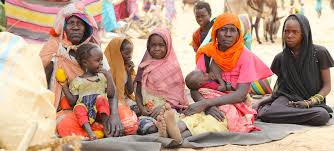
The stories here do not need statistics to convey the scale of the tragedy. Every woman’s face tells a story of suffering, and every birth is a battle for survival. This is not merely a health issue; it is a humanitarian catastrophe that demands immediate intervention to save lives and protect the fundamental right of women and girls to live with dignity.
Sexual Violence Pushing Sudan Toward an Epidemic
“Sudan’s already fragile health system has been shattered,” said Wafaa Adam, an embryologist. “Sexual and reproductive health services, which were already scarce, are now virtually gone. With sexual violence occurring on a massive scale and no access to treatment, Sudan is on the precipice of a major public health disaster linked to the spread of HIV/AIDS and other sexually transmitted diseases.”
The crisis is intensified by pregnancies resulting from rape. Accounts of dangerous, unsafe abortions are on the rise, exposing women and girls to high rates of infection, injury, and death in a vacuum of medical care. The stigma surrounding rape forces many families to hide pregnancies and births, leading to deliveries in the most hazardous conditions imaginable.
The loss of access to contraceptives remains a critical challenge. Sudan’s reproductive health services were already precarious, relying heavily on donor funding and private-sector initiatives that have now vanished. This has severed the supply chain for modern contraceptives, leaving women and girls with no options.
Ensuring access to sexual and reproductive health services is now a life-saving necessity. There is also an urgent need for a national public health strategy to prevent a post-war HIV/AIDS epidemic, drawing on the hard-won lessons of other nations that have navigated similar catastrophic circumstances.
—This report was prepared by the Al-Alq Center for Press Services. The Sudan Media Forum and its member organizations are publishing this material to shed light on the devastating impact of the war on the health of women and mothers in Sudan. The collapse of the health system has stripped them of essential care, while the absence of safe childbirth and reproductive services has drastically increased maternal mortality and health risks. The


