
Sudan Media Forum
Cairo, June 7, 2026 (Editorial Room) – Disturbing scenes circulating widely on social media have highlighted the plight of Sudanese and other foreign nationals in Libyan cities, where they have been subjected to harassment, threats, and physical assaults in public squares, streets, workplaces, and even their homes. The attacks have often been accompanied by derogatory language and calls for foreigners to leave the country.
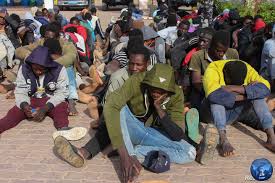
From inside the notorious “Prison 71” in the coastal city of Tobruk on the Mediterranean Sea, a 25-year-old Sudanese detainee, identified only by the initials S.A., shared his testimony. Held alongside dozens of other Sudanese youths and a small number of Egyptians in an overcrowded space he managed to film, S.A. offered a glimpse into the harsh conditions endured by detainees, some of whom have been held for periods ranging from one month to as long as two years. In an environment where the stench of sweat and filthy toilets mingles with despair and hopelessness, survival itself has become a daily struggle.
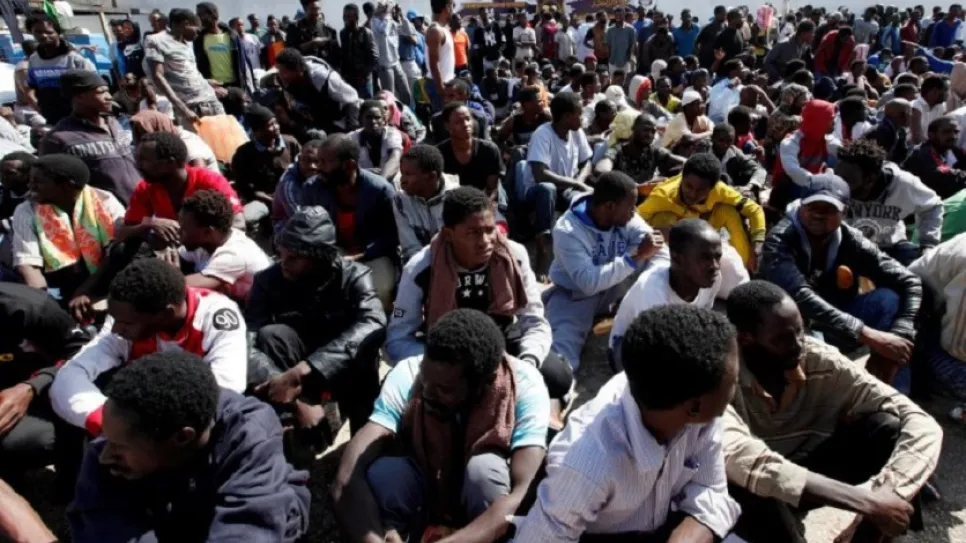
Sudanese nationals have been subjected to direct violence in public spaces, leaving many unable to leave their homes even to obtain basic necessities
Sudanese and Journalists Face Growing Hostility
In recent years, Sudanese nationals in Libya, along with other foreign communities, have periodically faced anti-immigrant campaigns driven by segments of the Libyan public calling for the expulsion of migrants. In recent weeks, however, hostility has intensified, leaving thousands of Sudanese exposed to increasingly dangerous conditions.
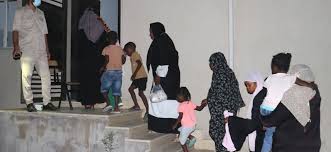
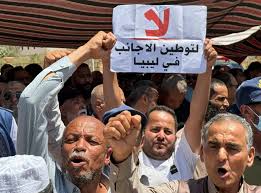
During the first week of June, demonstrations were held in several Libyan cities calling for the closure of the United Nations High Commissioner for Refugees (UNHCR) and an end to asylum procedures. Social media platforms were flooded with anti-foreigner rhetoric and demands for the deportation of migrants, including those legally employed. Videos circulating online showed Sudanese nationals being subjected to direct violence in public spaces, forcing many to remain indoors, unable even to meet their basic daily needs. This has unfolded amid a complete absence of engagement from Sudan’s diplomatic mission.
A Sudanese journalist told Sudan Tribune that fear and insecurity have escalated dramatically, preventing her and her family from moving freely. “The embassy has not reached out to Sudanese nationals or checked on their conditions,” she said.
The Sudanese Journalists Syndicate issued two consecutive statements expressing concern over the situation of 39 Sudanese journalists stranded in Libya, including 16 women journalists. In a subsequent statement, the syndicate reported that eight journalists had experienced violations within a single week, including threats, insults, incitement, and discrimination in accessing essential services and basic necessities. One journalist reported being forced to relocate with his family after receiving threats.
Since the outbreak of war in Sudan, more than 590,000 people have fled to Libya, with Sudanese nationals now constituting the largest migrant community
Fleeing Danger by Embracing Greater Risks
The journey to Libya is itself fraught with peril. Many migrants attempt to cross vast desert routes where dozens have died from dehydration or becoming lost. For many, Libya serves as a gateway to Europe, making the Mediterranean crossing the next stage in a desperate search for safety and opportunity.
Despite these risks, the United Nations estimates that more than 590,000 Sudanese have fled to Libya since the outbreak of war in April 2023. As of April 2026, approximately 91,000 Sudanese were registered with UNHCR.
According to the International Organization for Migration (IOM), Sudanese nationals constitute the largest migrant community in Libya, accounting for 36 percent of the country’s estimated 936,000 migrants at the beginning of 2026.
Testimony from Inside “Prison 71”
A detainee said: “We use this bathroom to relieve ourselves and drink from its taps despite the salty water. Our daily ration consists of a piece of bread and a triangle of cheese.”
“As you can see, we are packed tightly together,” S.A. said from inside the detention facility. “We share blankets when we sleep. Our bodies are pressed against one another.”
A toilet sits in the middle of the room. Although the footage was dimly lit, it clearly revealed unsanitary conditions. “We use this bathroom, just centimeters from where we sleep. We drink from its taps despite the salty water. Each day, we receive a piece of bread and a triangle of cheese,” he said.
According to S.A., many of the Sudanese detainees were arrested shortly after crossing into Libya from Egypt.
“I entered Libya through smuggling routes in search of work. We were arrested immediately after crossing the border. Around 60 Sudanese women are also being held in this facility. The Sudanese authorities have done nothing to help us. Even the Sudanese smuggler who facilitated our journey took his money and disappeared,” he said.
S.A. is currently waiting for his family to send 1,000 Libyan dinars to secure his release.
“There are around 60 Sudanese women being held in Prison 71, yet the Sudanese authorities have done nothing to address our situation”
“Prison guards told us we must pay the amount to be released. They said it covers health card procedures and the regularization of our legal status, after which we would be allowed to work normally,” he explained.
Information available about Prison 71 suggests that it is not a formal prison but rather a detention center operated by Libya’s 71st Border Guard Unit and designated for undocumented migrants. Media reports have documented testimonies from detainees of various nationalities alleging abuse and extortion.
Authorities in Ajdabiya detained 31 Sudanese nationals, including 24 individuals identified as having health conditions
In a verified video statement, a spokesperson for the Interior Ministry branch in Ajdabiya stated that irregular migrants apprehended by authorities are transferred to the judicial branch in Ajdabiya and subjected to legal procedures before deportation to their countries of origin. He made no exception for Sudanese nationals despite the ongoing conflict in Sudan and confirmed the existence of an intensified security campaign targeting undocumented workers.
The spokesperson revealed that 31 Sudanese nationals detained in Ajdabiya during May 2026 were scheduled for deportation, including 24 individuals classified as ill. Although he did not specify their conditions, he stated that illnesses identified among detainees of different nationalities included tuberculosis, hepatitis, and HIV/AIDS, highlighting concerns over deteriorating health conditions among migrants.
Why the Surge in Hostility?
The Sudanese presence in Libya is not new. Sudanese workers have lived and worked in Libya for decades, fostering historical ties between the two societies. Migration was once relatively regulated and largely employment-driven.
However, the war in Sudan has pushed tens of thousands into a country already grappling with political instability, economic hardship, and security challenges. As a result, many Libyans increasingly perceive refugee arrivals as an additional burden on housing, services, and employment opportunities.
The spread of misinformation has further fueled tensions, often portraying Sudanese migrants as a security threat. Rumors that UNHCR intended to permanently resettle Sudanese refugees in Libya have also intensified fears of demographic change. UNHCR has publicly denied such claims.
Defying Death in Search of a Dignified Life
For 24-year-old Bakri, displacement has defined much of his life. Originally from Wadi Salih in Darfur, he fled to Khartoum as a child with his mother and siblings after losing his father during fighting in the region. Khartoum seemed a place of stability until war erupted in 2023. The family then fled again to Al Jazirah State, only to be displaced once more as conflict spread there.
Traveling atop pickup trucks, Bakri eventually reached Egypt. There, uncertainty over residency status, fears of detention or deportation, and limited access to employment and education pushed him to consider a new journey—this time toward Europe through Libya.
“I know the risks, but I still want to go to Libya,” Bakri said. “I see no future otherwise. Either I find a dignified life in Europe, where human rights may be respected, or I die trying to achieve my dream.”
After sharing his story, Bakri left for Libya. His fate remains unknown. He may now be among those hiding in fear, detained in a prison, or risking his life at sea in pursuit of a better future.
Death at Sea
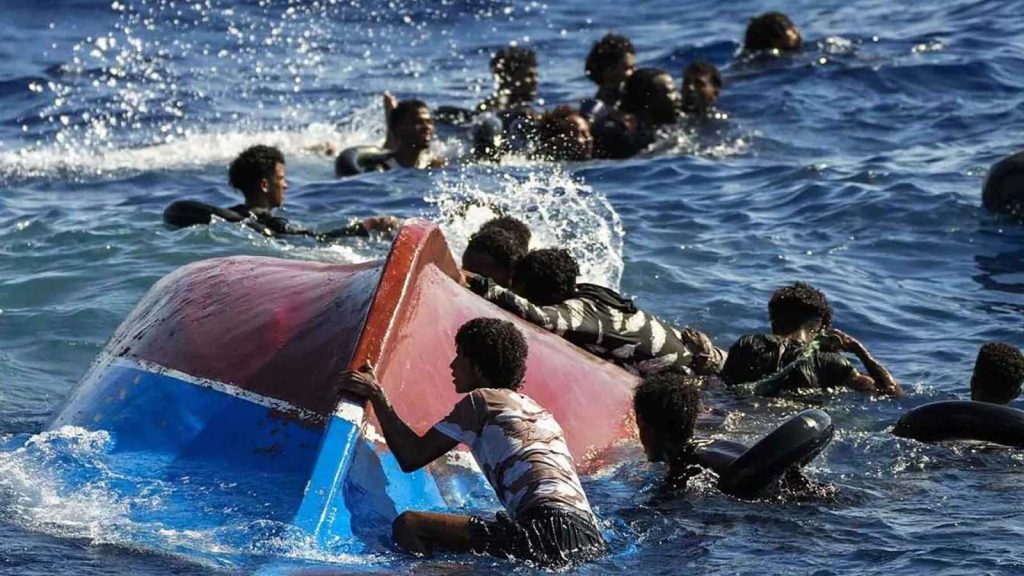
There are no precise statistics on the number of Sudanese who have died attempting to cross the Mediterranean. However, given that Sudanese migrants constitute the largest migrant group in Libya, international organizations and media reports suggest that dozens, if not hundreds, have perished in recent years.
In September 2025, approximately 50 Sudanese refugees died when a vessel sank off the coast of Tobruk. UNHCR also reported the sinking of another boat carrying 74 people, most of them Sudanese.
According to United Nations estimates, more than 600 people died on Mediterranean migration routes during the first months of 2026 alone.
The International Organization for Migration has likewise recorded hundreds of deaths and disappearances each year along the Central Mediterranean route departing from Libya. Between January and September 2025, nearly 900 deaths and disappearances were documented.
Trapped Between War and Exile
Driven from their homeland by war and confronted by growing hostility in their country of refuge, thousands of Sudanese in Libya now find themselves trapped between fear and uncertainty.
Having escaped bombardment, violence, and displacement in a conflict they did not choose, many now face a new struggle for dignity, safety, and the right to live. They remain caught between closed borders and a sea that has swallowed the dreams of countless others, amid the absence of meaningful action from Sudanese authorities and the indifference of the international community.
This report is published by the Sudan Media Forum and its member organizations to shed light on the challenges facing Sudanese nationals in Libya amid escalating anti-foreigner campaigns. Thousands who fled war, persecution, and economic hardship in search of safety and opportunity now face rejection, detention, and mounting threats to their lives, driving many toward increasingly desperate and dangerous choices.


