
An investigation reveals how digital fraud networks exploit Sudanese refugees’ desperate need for humanitarian assistance through fake social media pages and fraudulent links impersonating international organizations, luring victims into elaborate scams.
Sudanese Media Forum
By Rehab Fadl Al-Sayed
Khartoum, June 21, 2026 (Al-Alaq Media Services Center) — A WhatsApp message plunged Hadiya into severe financial and emotional hardship. The sender claimed to be a Sudanese representative of an initiative supporting Sudanese refugees in Egypt and informed her that, to receive humanitarian assistance, she needed to transfer 350 Egyptian pounds in her name and the same amount on behalf of her children—a total of 700 Egyptian pounds.
Hadiya, 47, is a Sudanese refugee and mother of six. She arrived in Egypt in 2025 after spending more than two years inside Sudan in areas controlled by the Rapid Support Forces (RSF). Working as a domestic laborer for a daily wage that rarely exceeds 200 Egyptian pounds, she struggles to support her family, > hile one of her sons helps cover the monthly rent.
Her ordeal began when she received a WhatsApp message from an individual claiming affiliation with a charitable initiative, though he never specified its name.
“The way he spoke, wrapped in messages of compassion and humanity, made me trust him,” Hadiya recalled. She transferred the requested amount to a mobile wallet account after being promised clothing assistance for herself and her six children.
When she arrived at the designated distribution site, she discovered that no aid initiative existed there. Repeated attempts to contact the sender went unanswered. Calling from a different number, she finally reached him, only to be told that the time and location of distribution had changed and that she should coordinate with another staff member. The new contact then demanded an additional 2,000 Egyptian pounds to “expedite” her application with the supposed initiative.
Digital Verification
Fraudsters frequently exploit the names of well-known international organizations to enhance their credibility, including the World Food Programme (WFP), the United Nations High Commissioner for Refugees (UNHCR), and the United Nations Children’s Fund (UNICEF).
As part of this investigation, five fake Facebook groups were analyzed. Poorly written content, glaring spelling mistakes—including errors in the groups’ names—and skeptical comments from followers were among the clearest indicators exposing their fraudulent nature.
Collectively, these groups have attracted more than 500,000 followers. According to Facebook’s Page Transparency data, four of the groups were created after the outbreak of the Sudan war, during 2024 and 2025. They actively circulate misleading information while using official logos and branding belonging to legitimate organizations to make their content appear authentic.
These pages employ aggressive pressure tactics, urging users to act quickly and creating a false sense of urgency. Once trust is established, victims are eventually asked to transfer money.
During Ramadan 2026, a series of images showing Red Crescent workers unloading food aid boxes from a truck spread widely across dozens of fake accounts and groups. The images were accompanied by claims that Ramadan food assistance had arrived and invitations to register by contacting administrators through Facebook Messenger.
Using reverse image search technology through Google Images, the investigation found that the images were misleading. Their earliest publication dated back to October 25, 2024, documenting a humanitarian aid distribution operation along the Syrian-Lebanese border.
The recycling of old images in unrelated contexts remains one of the most common disinformation techniques. Fraud networks routinely repurpose archived photographs to create a false appearance of legitimacy and attract larger numbers of potential victims.
| No. | Group Name (as shown) | Date Created | Number of Followers | Country of Origin |
|---|---|---|---|---|
| 1 | World Food Programme for Supporting Families in Sudan | May 2025 | More than 69,000 | Sudan |
| 2 | News of the Poisoned Refugee Commission Affairs | January 2025 | More than 158,000 | Location Hidden |
| 3 | World Food Programme for Supporting Families in Sudan (WFP) | December 2024 | More than 76,000 | Sudan |
| 4 | Monitoring and Evaluation Partners of the World Food Programme | May 2022 | More than 149,000 | Yemen |
| 5 | UNICEF Organization | October 2024 | More than 16,000 | Syria |
More Than Just Money
The objectives of actors spreading disinformation in the humanitarian sector appear to extend beyond financial gain.
One example involves Amani, a 36-year-old Sudanese refugee living in Egypt. She contacted a WhatsApp number advertised in a Facebook post claiming affiliation with the World Food Programme.
Expressing interest in registering for assistance, she was asked to provide personal information, including her name, address, family size, bank account number, and account holder details. After submitting the information, she received a message stating: “Praise be to God, your registration with the Qatari organization has been successfully completed.”
She was then informed that the registration process could only be finalized by providing an Imo contact number for a video call, after which she would allegedly receive cash assistance.
Amani and Hadiya are among thousands of Sudanese refugees who follow fake Facebook groups and rely on them for updates about UNHCR and organizations providing educational, health, and humanitarian services.
WFP Issues Warnings
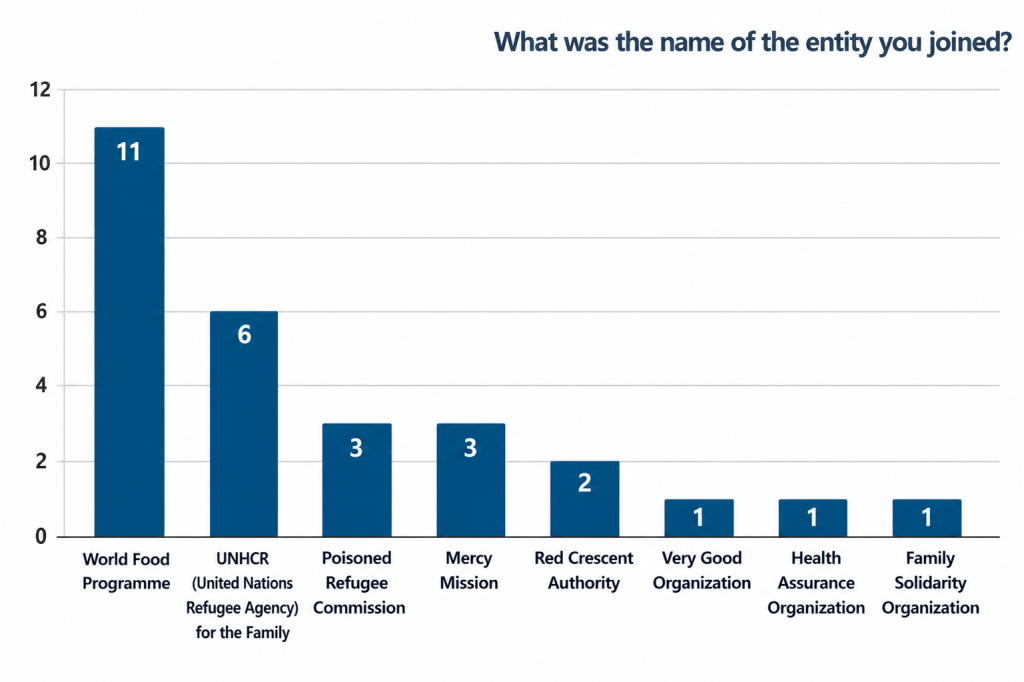
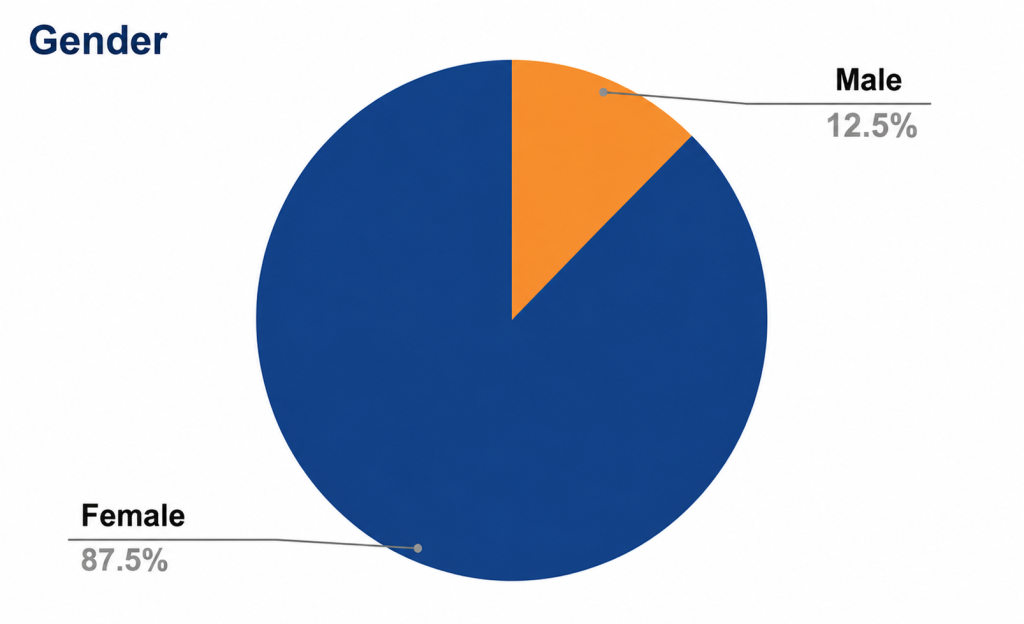
A survey conducted among 30 Sudanese refugees in Egypt—87 percent of them women—found that the World Food Programme was the organization most frequently impersonated in online fraud schemes.
Eleven respondents reported having been targeted by scams conducted under the WFP name.
Based on these findings, the investigation contacted the organization’s communications department via email, seeking clarification on whether it had documented cases of fraud, identity theft, or misuse of its name, logo, or brand identity, as well as information on legal and technical measures taken against perpetrators and strategies used to combat disinformation. No response had been received by the time of publication.
However, open-source research revealed repeated warnings posted on the organization’s official platforms regarding fraudulent Facebook and WhatsApp links falsely claiming affiliation with WFP.
The agency emphasizes that all its services are provided free of charge and that beneficiaries are never required to pay fees to receive humanitarian assistance.
In a public warning issued in Sudan, WFP stated that it is witnessing a significant increase in fake Facebook accounts and groups impersonating the organization. Such accounts pose a threat to public trust and contribute to the spread of misinformation.
To address the issue, WFP has introduced an initiative recruiting Arabic-speaking online volunteers to help identify and report fraudulent accounts to Facebook/Meta for removal.
The Threat of Algorithms
Dr. Adam Ahmed Adam, Dean of the Faculty of Arts at Omdurman Ahlia University and an expert in media literacy and disinformation, attributes the spread of humanitarian aid rumors largely to the scarcity of official information.
According to Adam, the absence of reliable information creates a vacuum that is quickly filled by rumors. In wartime, humanitarian assistance becomes a subject of intense public interest, and people are more likely to believe related information because such news offers hope amid difficult living conditions.
He noted that social media platforms have made verification increasingly difficult, while political and economic actors exploit these circumstances to pursue their own interests. Repeated exposure to false information within vulnerable communities often results in its acceptance as fact.
Adam further stressed that war itself accelerates the spread of misinformation due to widespread psychological distress, communication disruptions, and the absence of official channels in many regions. Fraudulent actors exploit these conditions by creating pages bearing the names of well-known humanitarian organizations and distributing links designed to collect personal information or facilitate financial extortion.
He warned that social media algorithms represent an additional danger because they are designed to amplify content generating high engagement regardless of its accuracy. The volume of shares, comments, and reactions associated with misleading humanitarian content often enables it to spread rapidly and widely.
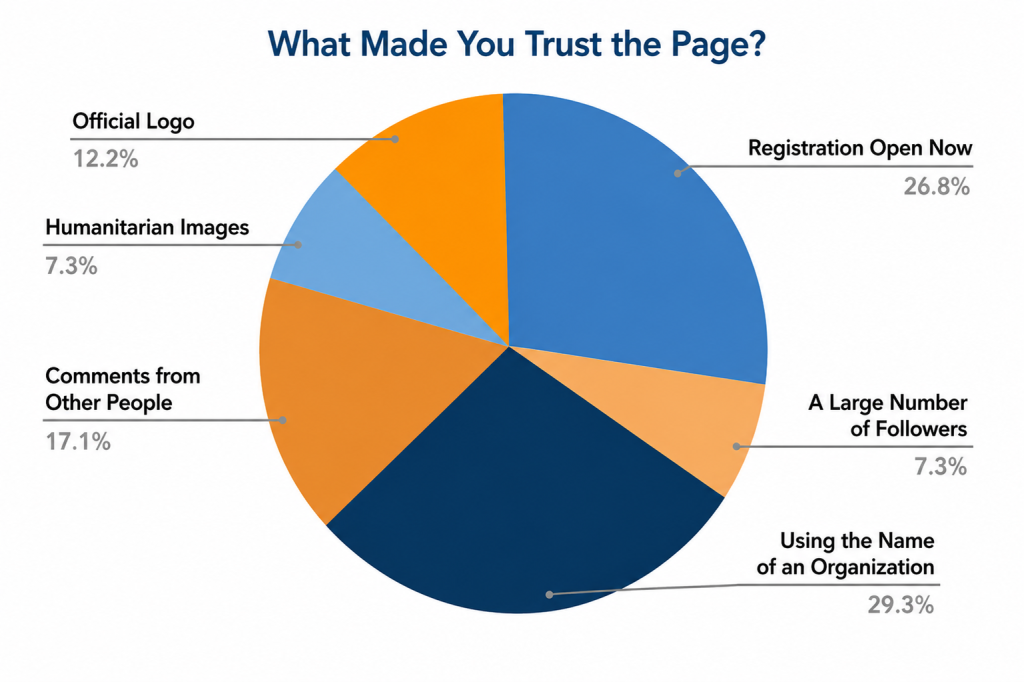
Financial and Psychological Damage
Survey findings revealed that 16 of the 30 respondents first encountered these fraudulent actors through Facebook pages and WhatsApp groups, while the remainder were approached through individual campaigns.
Regarding payment methods, more than 65 percent transferred money directly to personal accounts, 20 percent used bank transfers, and 13 percent paid through electronic wallets.
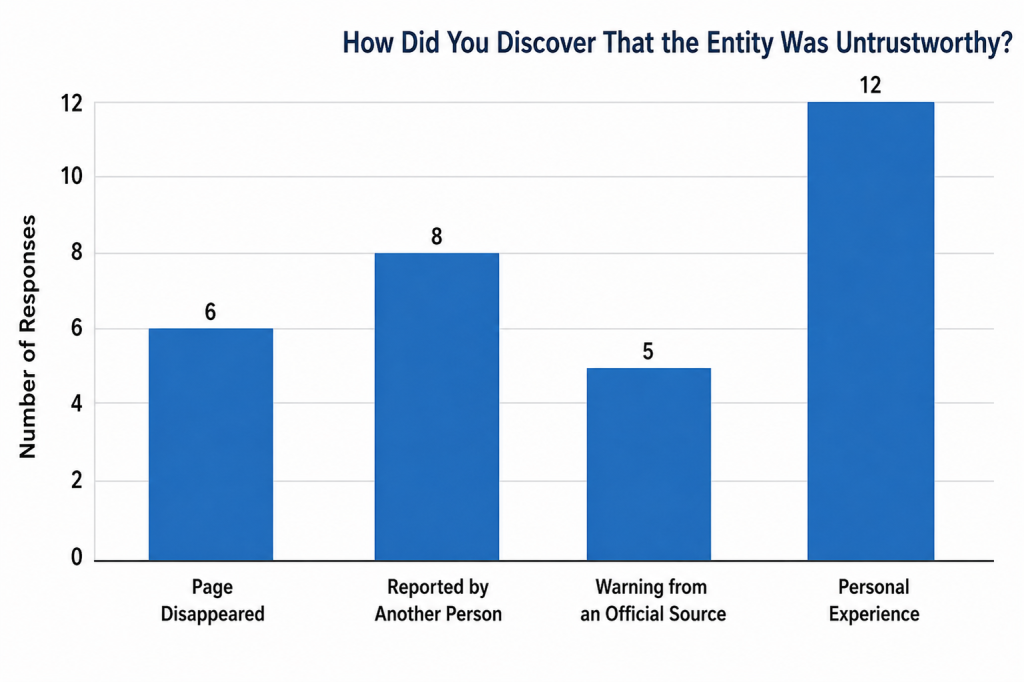
Twelve respondents discovered the fraud through personal experience, eight were warned by other individuals, and four learned of the deception through official warnings.
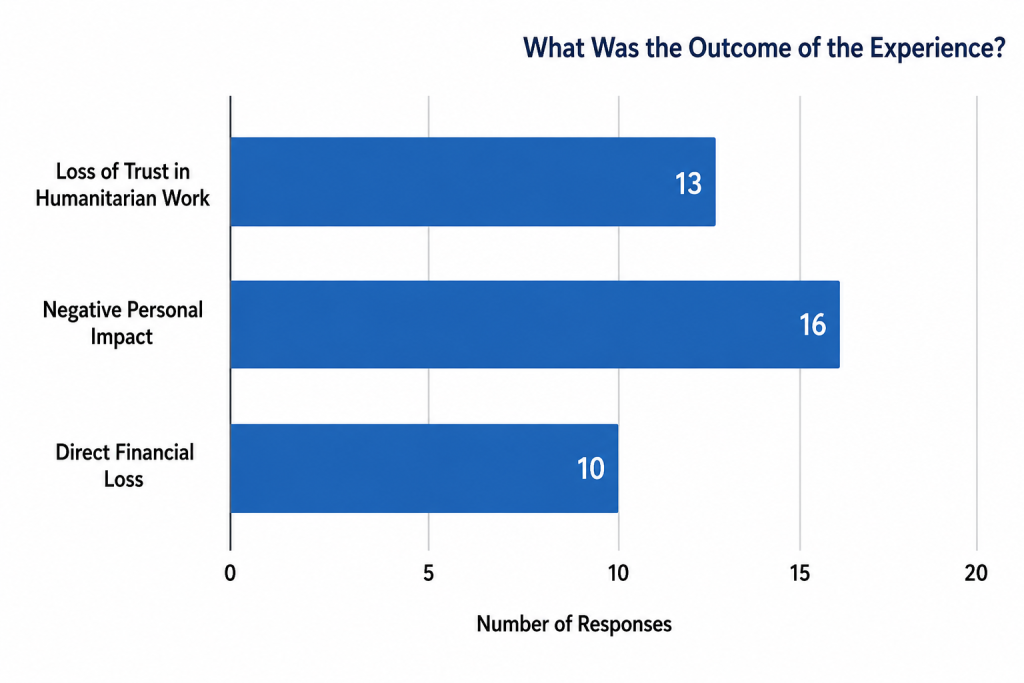
The consequences were significant: ten respondents reported direct financial losses, sixteen suffered psychological distress, and thirteen said they had lost trust in humanitarian organizations as a result of these experiences.
Legal Framework
Sudan’s Cybercrime Act of 2018, as amended in 2020, criminalizes all forms of electronic fraud intended to obtain money or benefits through deception.
Article 12(1) stipulates that anyone who intentionally uses information networks, communication systems, applications, or related technologies to deceive another person for the purpose of obtaining money, documents, data, information, benefits, or inducing them to undertake an electronic transaction shall be punished by imprisonment for up to seven years, a fine, or both.
Article 12(2) increases the penalty for repeat offenders, providing for imprisonment of up to nine years, a fine, or both upon a third conviction.
Persistent Cases
Ashraf Milad, an Egyptian lawyer specializing in migration, refugee affairs, and human rights, recalled reporting a fraud case to UNHCR Egypt two years ago involving a Sudanese refugee who purchased a SIM card and registered it on the Truecaller application so that it appeared on victims’ phones under the name of the refugee agency.
The perpetrator then solicited money from refugees under false pretenses.
Speaking about the prevalence of such crimes, Milad said he encounters at least one cyberfraud case every three months and has reported approximately 30 fraud cases to UNHCR over the past decade.
Links to Warnings Issued by the World Food Programme
https://www.wfp.org/careers/fraudulent-job-offers?utm_source=chatgpt.com
Links to Impersonation Pages on Facebook
https://www.facebook.com/groups/1738578037079431?locale=ar_AR
https://www.facebook.com/groups/1007303981220783?locale=ar_AR
https://www.facebook.com/groups/8434706609968473?locale=ar_AR
https://www.facebook.com/groups/952192105476253?locale=ar_AR
https://www.facebook.com/groups/889767129775873?locale=ar_AR
This report is published by the Sudan Media Forum and its member organizations. Produced by the Al-Alaq Media Services Center and supported by data-driven evidence, it sheds light on the growing wave of online fraud targeting Sudanese refugees through fake pages and groups that impersonate the names and logos of well-known humanitarian organizations. The investigation aims to raise public awareness of these deceptive practices and demonstrates how misinformation, recycled images, and fraudulent communication links are used to lure victims into transferring money or surrendering sensitive personal information.


