

Sudan Media Forum
By Amal Yahya
October 30, 2025 (TAWILA) – Jabraka News – The internally displaced persons (IDP) camps in the Tawila area of North Darfur are living in a state of fear and panic ever since the Rapid Support Forces (RSF) managed to take control of El Fasher, the capital of North Darfur and the last stronghold of the Sudanese army in the region.
The sounds of crying and wailing are constant in the camps, and anxiety clouds the faces of the displaced, who have lost contact with their relatives amid the spiral of war and destruction.
Fatima Hilal, an IDP in the Tawila camp, says with a trembling voice thick with anxiety: “Since last Sunday, we have been living in extreme tension. We do not know the fate of our families in El Fasher. Every tent here has someone who has lost a person or is waiting for news of their family.”
She adds in her interview with “Jabraka News”: “We don’t know if they are alive or dead, or if our women have been raped. We live under endless fear; we fear for those of us who remain as much as we fear for those who are gone.”
The United Nations says 1,350 civilians have been killed in El Fasher since Sunday, a figure it calls “an undercount,” while the Darfur regional government states about 2,000 have been killed, according to its statistics.
Killings and looting
Following the RSF’s declared control over El Fasher, video clips spread showing these forces committing acts of killing, robbery, looting, and arresting people based on their identity.
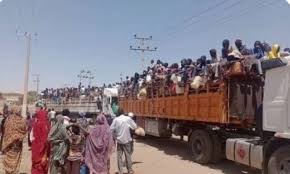
Since then, news of civilians in El Fasher has been cut off, as many fled in an attempt to escape the deteriorating situation. These events raise grave concerns about the fate of women and children amid these explosive conditions.
To this moment, the residents of El Fasher live in a state of panic and fear, subjected to grave violations by the RSF, as shown in video clips circulating on news platforms and social media, raising questions about the practices and continuous violations of these forces.
Total isolation
Mariam Hamid, a bereaved mother fighting back tears, recounts her tragedy to “Jabraka News,” saying: “The Rapid Support killed my son in El Fasher and left me with nothing in this world.” She adds: “They killed my two brothers, and now they are burning my heart for my child. There is not a single house in Darfur that is without grief.”
Since the recent battles began in El Fasher, the city’s residents have been living in total isolation after the “Starlink” satellite communication networks—their only means of communication with the outside world—were cut off. Local sources indicate that those managing the networks fled the city after the fighting intensified, making it nearly impossible to know the condition of civilians.
Video clips published on pages supporting the RSF show horrific scenes of destruction and suffering in the southern neighbourhoods of El Fasher, while civilians flee on foot through rugged roads in search of safety.
Tears and anxiety have become the language of daily life in Tawila, where the displaced live in hopes of receiving news to reassure them about their relatives in El Fasher. But until this moment, the fate of the civilians remains completely unknown, while a heavy silence hangs over the atmosphere, like an omen of a greater tragedy.
Communication cutoff
Human rights activist Mohammed Abdullah told “Jabraka News” that the humanitarian situation in El Fasher is completely unclear due to the communications blackout and the difficulty of accessing reliable sources. However, indicators from the ground and videos published on social media—especially by the RSF—suggest the situation is extremely dire.
He explained that the violent battles led to the situation spiralling completely out of control after the fall of the army’s division in the city, and there is no confirmed information apart from scenes documenting the execution of civilians in RSF custody.
Mohammed Abdullah added that some civilians managed to escape, but communicating with them is difficult. He noted reports of serious violations against those fleeing the city and those within it, including physical assault, sexual violence, and field executions.
He also relayed from a source in the (Abqamra) area that civilians who tried to leave El Fasher, especially women and children, were attacked by drones.
He pointed out that the city is witnessing a total collapse of security and a complete absence of regulatory bodies and international humanitarian agencies, including the UN and human rights organisations, which worsens the humanitarian situation and the ongoing violations.
For his part, Adam Rijal, the official spokesman for the displaced and refugees, told “Jabraka News” that 360 families (1,117 individuals) were displaced from El Fasher to the Tawila area on October 27, 2025, bringing the total number of displaced families to 831 (3,038 individuals).
He added: “These families are living in critical humanitarian conditions and need basic services such as water, healthcare, food, shelter materials, and protection.”
He confirmed that violations were committed against the civilians arriving from El Fasher, increasing the urgent need for humanitarian aid.
In a brief statement, the Coordination of Resistance Committees in El Fasher called on all local and international bodies to act urgently to protect civilians, following the escalation of violations against residents fleeing the city.
The coordination affirmed in a statement reviewed by “Jabraka News” that those remaining inside El Fasher will continue to persevere and resist despite the harsh conditions, stressing that “silence in the face of the ongoing crimes is considered complicity with the aggressors.”
Fate of journalists
The Darfur Female Journalists Forum issued a statement on Monday, October 27, condemning the arrest of journalist Muamar Ibrahim by the RSF following their takeover of the 6th Infantry Division headquarters in El Fasher.
The forum held the RSF fully responsible for his safety, demanding his immediate and unconditional release.
Social media had circulated a video clip showing Al Jazeera correspondent Muamar Ibrahim detained by the RSF, speaking under duress, in a scene that reflects the extent of the danger facing media workers in El Fasher.
The Darfur Female Journalists Forum expressed grave concern over the loss of contact with several female journalists and media professionals due to the shutdown of communication services in North Darfur, leaving their conditions and fate unknown.
The forum called on international organisations concerned with press freedom to act urgently to protect male and female journalists in the region and to stop their targeting, stressing that protecting media professionals is a legal and moral obligation that cannot be postponed.
In the same context, the governor of the Darfur region and head of the Sudan Liberation Army movement, Minni Arko Minawi, stated on his “X” platform account that the fall of El Fasher does not mean “surrendering the future of Darfur to violent groups or the interests of corruption and clientelism,” as he put it.
He called for the protection of civilians and for the fate of the displaced to be revealed, demanding an “independent investigation into the violations being committed by the Rapid Support Forces far from sight.” He affirmed that “every inch of the region will return to its people.”
Field executions
The UN Human Rights Office warned of a dangerous escalation of violations in the cities of El Fasher in North Darfur and Bara in North Kordofan, after the RSF took control of large parts of them in recent days. It noted reports of field executions of civilians and besieged people trying to flee the fighting.
High Commissioner for Human Rights Volker Türk said the situation in El Fasher has become extremely dangerous since the RSF announced its control over the 6th Infantry Division headquarters, warning of the “daily risk of large-scale atrocities” motivated by tribal affiliation.
In a statement on Monday, October 27, 2025, Türk called for urgent measures to protect civilians and secure safe passage for those besieged. He demanded the RSF respect its obligations under international humanitarian law and prevent reprisal attacks and violence based on tribal identity.
The UN office explained that the RSF carried out summary executions of civilians who tried to flee El Fasher, including five men killed for trying to bring food aid into the city, which has been besieged for 18 months.
The UN also received reports of hundreds of fleeing people being detained, including journalists, in addition to fears of widespread sexual violence against women and girls.
In its latest data, it noted that more than 1,350 people were killed in El Fasher, while the Darfur regional government confirmed the number had reached 2,000 since the RSF took control of the city.
The UN stressed the need to hold all parties involved in violations of international law accountable, emphasizing that ensuring accountability is the only way to stop the cycle of recurring atrocities in Sudan.
As the battles continue in El Fasher, the fate of civilians remains unknown, and fears for their safety and security grow, especially in light of the recent violations they are subjected to by the Rapid Support Forces.
—–
The Sudan Media Forum and its members publish this material, which was prepared by the (Jabraka News) platform. The article reflects the conditions of civilians who fled the city of El Fasher to avoid the certain death awaiting them at the hands of the Rapid Support Forces. The article explores the situations of some of the bereaved women who reached the city of Tawila and documents the preliminary statistics of the victims, whose number has reached two thousand dead in some estimates.


