
Sudan Media Forum
Saadi Osman Abkar
EAST DARFUR,October 6, 2025 (INVESTIGATIVE) – “I suffer from a thyroid disease and a hormonal imbalance, and I rely on the health insurance pharmacy to get my medication. Now I can’t afford to buy it because of its high price. I just want to know, has the insurance service been suspended completely, or is there hope that it will return?” Mihrab Adam, a university student, told our investigative reporter.
This report reveals the suffering of Darfur residents after the suspension of health insurance services due to the war and administrative corruption. Their hardship has been compounded by political developments, including the announcement of a new “Founding” government by the Rapid Support Forces and its allied armed and civilian groups.
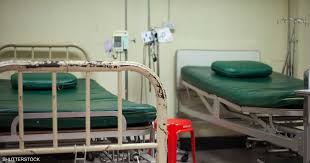
In the Darfur region of western Sudan, where the ravages of war intersect with economic collapse, essential services have crumbled, with healthcare being the most prominent casualty. Among the vital institutions most affected by the war and its aftermath is the National Health Insurance Fund, which ceased providing services without prior notice. Citizens covered by the fund now face additional burdens threatening their lives and the lives of their families. According to statements from health insurance officials in Darfur obtained by this investigation, the service was crippled by war and corruption, particularly in East Darfur and its localities, as well as in the Al-Lait and Fataha areas of North Darfur. This sudden halt has turned insurance cards into worthless pieces of paper amidst official silence, a lack of transparency, and the absence of any real accountability.
From 75% coverage to a complete stop
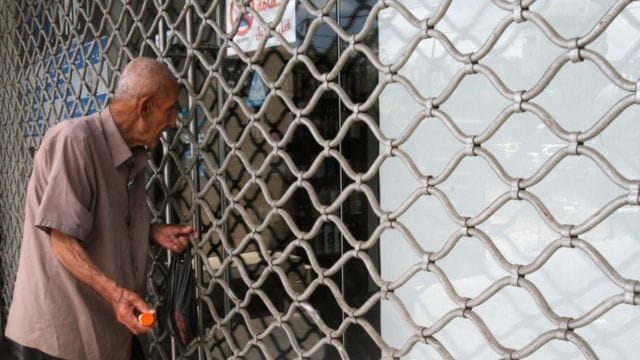
Previously, health insurance covered 75% of the needs of card-holding citizens in East Darfur, providing consultations, laboratory tests, diagnostic imaging, treatments, and medications. This was a significant support system for those under the insurance umbrella. With the start of the war in April 2023, communication between the National Health Insurance Fund’s General Administration in Khartoum and the East Darfur state branch was severed, leading to the gradual closure of affiliated health centres. This was not a temporary interruption but a complete shutdown of health insurance facilities. “At a time when citizens’ reliance on insurance was increasing due to the decline of public health institutions and the rising cost of private care, the central fund simply ignored the centres in Darfur,” said one employee.
“We were left to face our fate”
“The suspension of health insurance in Darfur was sudden, with no official notice or alternative plan, leaving thousands of patients to face their fate,” said Essam Mohamed, a statistics employee at the East Darfur Health Insurance Fund. He added, “Following the outbreak of the April 15 war, communication with the central administration in Khartoum was lost. In July 2023, a state decree was issued placing 70% of the employees at the East Darfur branch on open-ended leave without pay.”
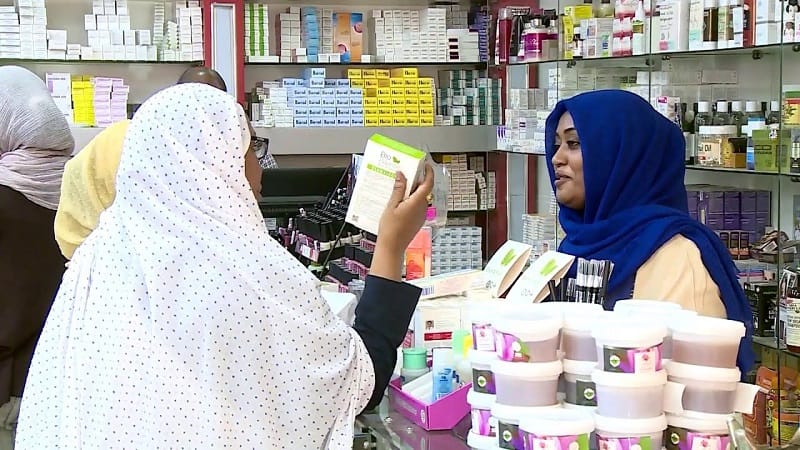
Citizens and insurance administration staff reported that the service gradually disappeared from most centres across the state capital and its localities until they were all completely non-operational. The only exception is a single main centre in El Daein, East Darfur’s largest city, which functions at a limited capacity through local state efforts and support from humanitarian organizations, without any backing or oversight from the National Health Insurance Fund. Its service coverage meets no more than 3% of the citizens’ needs.
Patient confusion
The majority of health insurance beneficiaries are patients with chronic diseases. According to officials, 90% of subscribers are public and private sector employees, all classified as low-income individuals vulnerable to market fluctuations. They were directly impacted by the war, which severely complicated their situation. Mariam Mohamedeen, 40, said, “I am a diabetic and used to get my insulin for free with my insurance card. Since early May 2023, the Al-Sikka Hadid health centre has been closed. Now I have to buy my medicine on the open market at prices I can’t afford. I often miss doses due to my limited income, while insulin is being sold on the black market.”
Has health insurance in Darfur been permanently discontinued?
Mihrab Adam, the university student with a chronic illness, received her treatment from the Hay Al-Salam insurance centre. In early June 2023, she lost her insurance card and all her attempts to get a new one failed. “The centre is closed and remains out of service to this day,” she said. “I have a thyroid disease and a hormonal imbalance, and I depend on the insurance pharmacy for my medication. I can no longer afford to buy it. Has the health insurance service stopped for good?”
Mihrab’s question haunts all insurance card holders in East Darfur and across the region. “I went to the Fataha health centre on May 15, 2023, and found it closed,” said citizen Ibrahim Hamed. “When I asked, I was told the insurance service was unavailable. Now we have to pay out of our own pockets. My daughter has a chronic illness, and I can’t afford her medicine or even a doctor’s visit.”
The crisis predates the war
Interviews with officials and employees at the National Health Insurance Fund across Darfur’s states confirmed that the service was struggling even before the war, describing it as intermittent and limited. Most sources attributed the decline to administrative corruption and weak oversight from the central office in Khartoum. “The crisis wasn’t just about the service interruption; it extended into the system itself. Salary payments for health centre workers had stopped even before the war began,” said one employee, who asked to remain anonymous. These repeated, months-long salary delays crippled the staff’s ability to provide services, hastening the centres’ collapse and creating opportunities for misconduct and corruption, which often went unpunished.
A pharmacist at the Hay al-Arab health insurance centre stated, “We had no choice but to work without pay, driven by our humanitarian duty to serve our communities during this critical time for Sudan.”
She reported that the situation worsened after the local administration, unable to secure resources, issued a decision to suspend the service and place employees on indefinite, unpaid leave. This decision came a month after communication broke down between the Darfur branches and the central administration in Khartoum.
Insurance workers explained that the decline became noticeable in the first month of the war, beginning with a severe shortage of medicines, followed by a halt in laboratory testing. “The number of patients dwindled; we were covering about 300 a month. Now, with our services gone, patients have turned to private clinics,” one said.
Only an operational budget
An employee, (M.N.), at the Nyala health insurance office, blamed the central National Health Insurance Fund for the collapse in Darfur, calling it an act of corruption. “We haven’t received our salaries since February 2023, from before the war, which is what forced the centres to stop working. This is clear administrative corruption for which the central system is responsible,” she said.
Another employee, (A.J.), who handles residential coverage, pointed to outstanding payments owed to the East Darfur state branch by the Health Insurance Fund in Khartoum, dating back to 2022. According to him, these arrears were tied to a general budget that the central administration in Khartoum had failed to review for a year, procrastinating until the war broke out. This caused the delay in disbursing the East Darfur branch’s budget. “For three months before the war, we were running on an operational budget only,” he added. “After the war started, we received nothing.”
No services, yet deductions continue
Ironically, the insurance administration has continued to deduct service fees from subscribers’ salaries despite the complete halt in services—a complaint echoed by numerous card holders. An employee at the Tax Bureau said, “The money is deducted every month, while the centres are closed and treatment is left to a citizen’s ability to pay or perish.” Citizen Amna Ahmed said, “I am paying for nothing. Medicine and treatment are unavailable, yet the deduction continues from my son’s salary at the Ministry of Finance.” Another citizen, Omar Mohamed, added, “My treatment card is valid and the deduction from my salary is ongoing, but there are no services to show for it from the suspended health insurance.”
International organizations intervene
In the state’s absence, humanitarian organizations have emerged as key players, attempting to fill the gap left by the Health Insurance Fund’s failure to meet its obligations to subscribers. Amid a widespread collapse of the health sector, several organizations have worked to reactivate defunct insurance centres, trying to salvage what they can in an environment crippled by war and economic freefall. Since mid-2023, health centres have faced a strangling crisis, unable to provide basic medicines and services. While organizations have begun supplying essential drugs and limited support for medical tests, these efforts remain insufficient to cover all needs.
Support from organizations is intermittent
In an interview, Fatima Ibrahim, supervisor of the Al-Sikka Hadid health centre in El Daein, explained that while organizations have tried to fill the void, the gap is immense. “Despite their intervention, the organizations cannot provide a full supply of all medicines, and the support is intermittent and irregular,” she said. She noted that patients often receive only part of their prescription from an organization and must find a way to purchase the rest. This, she explained, has fostered corruption and nepotism. “Some people who have relatives working in these organizations get their full treatment at the expense of others,” she added.
In 2020, the European Union allocated €4.9 million for a project in North Darfur’s Kutum, Um Baro, and Saraf Omra areas to improve access to healthcare. The organization GOAL began upgrading 10 health facilities, enabling locals and internally displaced people to access essential care and medicines at heavily subsidized prices.
In a press release, GOAL stated that it provided incentives to health workers when monthly salaries were unavailable and supported insurance-affiliated centres. By January 2025, it had provided medical services to 150,000 people in Darfur.
Services: From free to paid
In an unexpected move, the East Darfur state government imposed fees on health insurance services that were previously free. This new rule also applied to subscribers who were still having insurance fees deducted from their salaries. “The ministry imposed fees on services that used to be free,” said an employee at the main insurance centre who requested anonymity. “Citizens are being forced to pay large amounts, even though their treatment cards are still technically valid.” According to citizens, the fee for a doctor’s consultation has reached 30,000 Sudanese pounds (approx. $10), with additional payments required for lab tests and medications based on their type.
Services based on political classification
Who is responsible for suspending health insurance? “Political classification,” answers Mohamed Babiker, a former employee of the Health Insurance Executive Administration in East Darfur. He elaborated, “The direct responsibility lies with the de facto government and its federal Ministries of Health and Social Development. They classified citizens in certain regions as being outside their administrative control and simply cut off their services.” According to Babiker, other factors contributed to the collapse, including the absence of legislative councils and public oversight, and the general paralysis of state institutions following the October 25, 2021 coup and the ensuing war. This created a vacuum of oversight where corrupt entities could act without accountability. Babiker alleges that officials in the de facto government colluded to halt the service, pointing to its continued suspension despite the availability of some resources and the targeting of specific areas with undeclared policies—a clear reference to the large swathes of Darfur controlled by the Rapid Support Forces and its recently announced “Founding” government.
Documented administrative corruption and arbitrary dismissal
Mohamed Babiker offers himself as a vivid example of this deep-seated corruption. He was arbitrarily dismissed after being assigned to the state’s Empowerment Removal Committee. “I was personally fired without cause after being assigned to the committee’s work, specifically to investigate the health insurance file,” he said. According to Mohamed, his dismissal was rushed and disregarded all proper procedures. “I was dismissed quickly because they feared I would expose the corruption in the health insurance system.” He stated that the administration’s dealings are rife with corruption, particularly regarding contracts, hiring, and service procurement from private clinics and pharmacies, as well as social service programs that never reached the people of East Darfur. “Because I knew about these files, I was dismissed without an investigation, a hearing, or a chance to defend myself,” he said. “In my view, this is corruption of the highest order.”
Not just the war
While the war has undeniably devastated health services and citizens’ lives, nearly erasing the government’s presence, it is not the sole cause of this crisis. Corroborating Babiker’s account, Ahmed Ibrahim, another employee at the Health Insurance Executive Administration, stated, “The current crisis isn’t just a result of war or insecurity. It reflects deeper structural problems within the institution, including clear signs of non-transparent hiring and budget management practices.” He clarified, “Corruption was a chronic problem, especially in contracts and human resources, which directly undermined the quality and continuity of our services.”
Several other employees of the National Health Insurance Fund in Darfur reiterated this point. They agreed that the security chaos contributed to the shutdown but was not the root cause. They insisted that the system continues to operate without a clear and transparent paper trail that would allow for the detection of fraud. All too often, they said, documents are burned or critical transactions are approved based on verbal orders alone.
Between employee testimonies, citizens’ cries, and official silence
The health insurance catastrophe in Darfur is a stark illustration of governmental failure in a time of crisis. It has exposed a pre-war system devoid of oversight and accountability—a fragile structure that crumbled at the first shots of war. It also reveals how corruption rotted the system from within, leading to its complete breakdown. Ultimately, the heaviest burden has fallen upon the citizens of Darfur, who remain in desperate need of urgent help.
The Sudan Media Forum and its member institutions publish this material, prepared by (Investigative), to expose the complete collapse of health insurance services in Darfur resulting from war and administrative corruption. This collapse has left thousands of patients without treatment or medicine, even as insurance fees are continually deducted from their salaries, amid a total absence of accountability. The report also highlights the limited capacity of humanitarian organizations to fill this massive void as the entire health sector disintegrates.


