
Sudan Media Forum
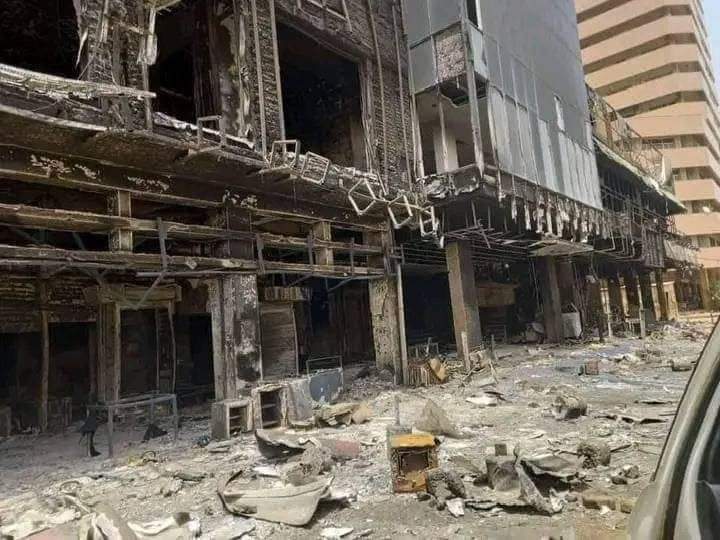
Khartoum, March 28, 2026 (Al-Jareeda) – In a scene reflecting the depth of Sudan’s economic crisis, major cities—foremost among them Khartoum—have lost much of their commercial and productive vitality, as economic activity declines and daily living conditions become increasingly difficult.
Since the outbreak of war in April 2023, Sudan’s economy has entered a critical phase marked by widespread contraction and a downturn across most sectors, amid a complex interplay of internal and external factors. More than 80% of the industrial and manufacturing sector has come to a complete halt, alongside the suspension of agricultural projects and state institutions. As the conflict drags on, pressing questions arise about the future of Sudan’s economy: Can the country recover, and what might reconstruction look like once the war ends?
An Unprecedented Economic Contraction
Financial institutions and economic experts estimate that Sudan’s GDP contracted by between 40% and 50% from 2023 to 2025—one of the steepest declines recorded in Africa in recent decades. Sudanese economist Dr. Ahmed El-Tigani notes that “the Sudanese economy has shifted from fragility to deep contraction, with the state losing a significant portion of its productive capacity in a short period.”
Sharp Decline in Productive Sectors
El-Tigani adds that the industrial sector has been severely affected, with estimates indicating that between 70% and 80% of industrial facilities have either ceased operations or been damaged due to disrupted supply chains and operational challenges.
The agricultural sector—long a cornerstone of the economy—has also seen production decline by between 30% and 50%, according to agricultural experts, driven by lack of financing, rising input costs, and logistical constraints. Experts warn that “continued trends could push Sudan toward greater reliance on food imports, despite its vast agricultural resources.”
Banking Sector Challenges
Reports indicate that the Sudanese pound has sharply depreciated, losing more than 80% of its value over the past two years, while inflation has exceeded 300% at times. This has driven up the cost of basic goods, particularly food.
Financial expert Mohamed Al-Amin explains that “high inflation and currency depreciation have eroded incomes, significantly shrinking the middle class and expanding poverty.” The banking sector has also faced major disruptions, including reduced services and interrupted transfers in some areas, prompting many citizens to rely on cash transactions. Banking sources note a growing shift toward informal economic activity, including the parallel market, due to declining trust in the formal financial system.
Decline in Foreign Trade
Sudan’s exports—particularly gold and agricultural products—have declined significantly due to reduced production and logistical challenges. At the same time, import costs have surged as a result of currency depreciation, making it increasingly difficult to secure essential goods.
Analysts argue that this imbalance in the trade balance is intensifying macroeconomic pressures and limiting prospects for stability. Recent estimates point to a widening trade deficit over the past two years, driven by a growing gap between exports and imports. Non-oil export revenues have dropped sharply, while the import bill has risen substantially due to increased dependence on external sources for essential goods such as wheat, fuel, and medicine.
Experts stress that this situation is putting pressure on foreign exchange reserves and increasing exchange rate volatility, directly affecting market stability and constraining the government’s ability to implement effective economic policies amid limited resources.
Extensive Infrastructure Damage
Preliminary estimates suggest that damage to infrastructure—including roads, electricity, water systems, bridges, and airports—ranges between $50 billion and $100 billion, underscoring the scale of the challenge facing future reconstruction efforts.
Labor Market and Brain Drain
Economic conditions have led to widespread job losses, with unemployment rates estimated to exceed 60%. The country has also witnessed a wave of skilled migration, which could undermine recovery prospects in the medium term.
Labor expert Abdelrahman Youssef warns that “brain drain represents a double loss, reducing current productivity while weakening future reconstruction capacity.”
Decline in Foreign Investment
Foreign investment inflows into Sudan have dropped significantly due to the war. Economist Dr. Mohamed Osman notes that many regional and international companies have suspended or withdrawn their investments, and strategic projects in key sectors such as energy, agriculture, and infrastructure have been frozen.
This withdrawal not only results in lost funding but also affects technology transfer and job creation, further complicating recovery efforts. Sudan now faces the challenge of restoring investor confidence by improving the business environment and strengthening institutional stability in the coming phase.
In summary, Sudan’s economy is undergoing a severe contraction. Millions have lost their livelihoods and now depend heavily on remittances from abroad. A major concern remains the acute shortage of foreign currency, with many markets increasingly relying on digital money transfer applications for daily transactions.
Toward Recovery
Experts believe that while Sudan’s economy is experiencing acute contraction and institutional fragmentation, it still retains key recovery potential—particularly in agriculture and natural resources. Reconstruction, they argue, will require political stability, deep economic reforms, and coordinated regional and international support.
Given these realities, the coming phase will be decisive. The challenge is not only to halt the decline but to rebuild a sustainable economy. While current indicators are deeply concerning, opportunities remain if a conducive environment for reform and investment can be established.
The Sudan Media Forum and its member organizations are publishing this article, originally prepared by Al-Jareeda, to reflect the broader economic conditions in Sudan amid the ongoing war between the Sudanese Armed Forces and the Rapid Support Forces. The report highlights key indicators, including a GDP contraction of 40–50%, severe disruption to the industrial sector—with 70–80% of facilities affected—and a sharp depreciation of the Sudanese pound by more than 80% over the past two years, alongside inflation exceeding 300%.


