
Sudan Media Forum
By: Nemat Al- haj
El-Obeid, March 10, 2026 , (Jubraka News) – Sudan’s livestock sector has long been one of the pillars of the national economy, contributing nearly one-third of the country’s gross domestic product, supplying both domestic and international markets, and serving as a primary source of income for about 40% of the population.
However, since the outbreak of war in April 2023 and the escalation of military operations across Darfur and Kordofan, the sector has faced unprecedented shocks affecting production, animal health, supply chains, and exports—placing the future of one of Sudan’s most vital productive sectors at serious risk.
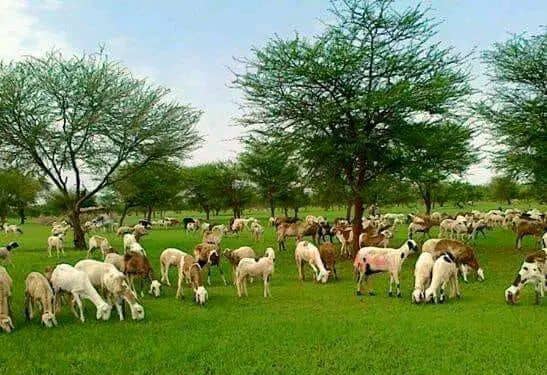
Before the war, pastoral movements extended across vast grazing lands, from the areas of Umm Badr and Hamrat al-Sheikh in the north to Bahr al-Arab and the Nuba Mountains in the south. These seasonal movements continued year-round. During the war, however, grazing areas have shrunk significantly, forcing herds into more limited spaces and creating severe water shortages. Wells (locally known as dawanki) have been unable to meet demand due to fuel shortages, sharply raising the cost of watering livestock. At the same time, markets for selling male sheep—traditionally used to cover operational costs—have largely disappeared.
Direct military confrontations in areas stretching between Al-Khowei and Al-Nuhud have also led to the death of large numbers of livestock, as stray bullets and artillery shells have struck herds, in addition to widespread pasture fires.
Another segment of livestock is tied to commercial trade routes heading toward markets in Darfur and Kordofan. After herds are gathered, they typically move eastward toward quarantine facilities in Al-Khowei, Al-Rahad, and Bara, where they undergo veterinary inspection before being transported to ports on the Red Sea for export.
According to an analytical report published by the Atr Network, citing the Food and Agriculture Organization’s Crop and Food Supply Assessment Mission and international research papers, Sudan’s livestock population stood at approximately 111.8 million head, including sheep, goats, cattle, and camels. The sector supplied around 90% of domestic meat consumption and served as a key source of foreign currency through organized exports—particularly sheep, camels, and cattle—to markets such as Jeddah and Cairo.
War Disrupts Livestock Trade
Hussein Osman, a livestock trader in Kordofan since 2008, said the war has completely disrupted the export system, which previously followed a structured logistical process involving local market collection, veterinary inspection, transport to export ports, and shipment through specialized maritime companies.
He explained that road closures, rising costs, and security risks have halted buying and selling activities and frozen exports, while new fees and transport and insurance difficulties have compounded the losses for herders and traders.
As the conflict expanded and grazing routes fell under divided control—some areas held by the Rapid Support Forces and others by the Sudanese army—the sector encountered major obstacles. Road closures prevented the transport of export livestock, while herds were increasingly exposed to systematic looting and theft, significantly raising costs.
Amid these conditions, armed individuals known locally as “mutawafeen” have emerged—usually residents of the same regions—who are hired to escort herds along migration routes in exchange for payment from herd owners.
Even so, livestock have not been spared from looting, particularly with the proliferation of so-called “gates” along the routes used by herds. These checkpoints, run by armed tribal groups, impose financial levies. In areas under RSF control, herds are sometimes detained and prevented from passing unless large payments are made.
Veterinary Services Under Strain
Yusuf Nawai Al-Badri, director of the livestock sector in South Kordofan, said military operations have forced grazing activity to shift toward the eastern parts of the state. As a result, Al-Qoz locality has become the main hub for livestock, currently hosting an estimated 12 million head.
He noted that veterinary coverage faces severe challenges and currently reaches no more than 30% of the total herds, even after interventions by some organizations supporting the sector. The weak coverage places additional pressure on local authorities amid disrupted supply chains and road closures.
Despite these challenges, traditional livestock corridors—known locally as marahil—continue to operate to some extent, while herders have sought alternative routes to protect their animals.
Later in the conflict, the leadership of the Rapid Support Forces issued a decision banning the passage of agricultural and livestock exports from Kordofan and Darfur to areas controlled by the army. As a result, livestock traders have been forced to seek alternative routes, heading north toward the town of Al-Dabba via Al-Mazroub—areas where water is scarce, significantly increasing costs, along with high transportation expenses.
Looting, Smuggling, and Shrinking Pastures
A livestock expert told Jubraka News that military operations have forced herders to avoid official migration routes, reducing access to grazing lands. He added that the two regions have witnessed widespread livestock looting and rising mortality rates due to disrupted access to pasture and water.
At the same time, livestock smuggling networks have become increasingly active, transporting animals to neighboring countries to meet growing demand amid resource shortages.
Concerns Over Informal Trade
In North Darfur, a resident of El-Fasher reported seeing large numbers of livestock along the road between Tawila and Qorni, a journey of about three hours by car, indicating a high concentration of herds in the area.
These areas currently fall within zones under RSF control according to the situation on the ground. There are growing concerns that some livestock transportation or sales may be occurring outside official regulatory frameworks governing veterinary quarantine and animal health, particularly amid weak oversight.
Observers warn that any exports conducted outside approved protocols may move through desert routes toward neighboring countries or through unregulated border crossings, though these claims could not be independently verified.
A Sector Under Severe Pressure
The war in Darfur and Kordofan has not only undermined security and political stability but has also struck at the core of Sudan’s agricultural and environmental economy. The livestock sector is facing severe pressure, including halted exports, shrinking pastures, rising livestock mortality, and the spread of smuggling and unregulated trade.
With large herds now concentrated in limited areas and veterinary coverage severely constrained, the prospects for restoring the sector and strengthening food security remain closely tied to improvements in security conditions, the reopening of transport routes, and stable animal health and export policies.
Despite these challenges, Sudan’s livestock sector remains a fundamental economic engine—one now facing unprecedented obstacles that require urgent and coordinated responses from government authorities, local and international organizations, and pastoral communities.
The Sudan Media Forum and its member institutions publish this report prepared by Jubraka News to highlight the extensive damage caused by the war between the Sudanese army and the Rapid Support Forces on the livestock sector, particularly in Kordofan and Darfur, where military operations remain widespread. Military operations have forced herders to abandon traditional grazing routes while facing widespread livestock looting and increasing mortality rates due to disrupted access to pasture and water. In this environment, livestock smuggling networks have also expanded, exploiting regional demand and resource shortages.


