
Sudan Media Forum
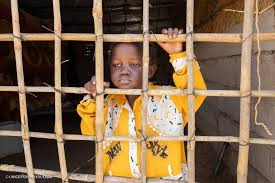
Port Sudan / Wad Madani, March 18, 2026 , (Sudan Tribune) – Amena Mohammed never imagined that Ramadan would come one day with her struggling to convince her children that a small amount of food is enough to break their fast.
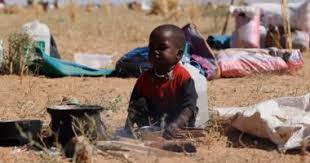
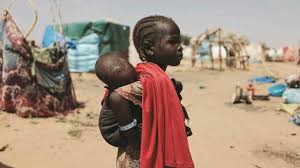
Amina fled with her three children from their home in Khartoum three years ago, as fighting escalated between the Sudanese army and the Rapid Support Forces (RSF). She now lives in a displacement shelter in Port Sudan, where the holy month has taken on a completely different meaning for her children.
“My children used to look forward to Ramadan every year to buy lanterns and new clothes,” Amina says, her voice heavy with a mix of sorrow and resilience. “This year, we only think about finding enough food. Sometimes, we don’t even have enough to break our fast.”
She adds that her children spend most of their time inside the shelter, with no safe spaces for play or education, as she tries to ease their hardship despite the harsh conditions.
Amina’s story reflects the reality of thousands of Sudanese families whose lives have been upended by the war that has raged since April 2023, forcing millions to flee their homes either within Sudan or to neighboring countries.
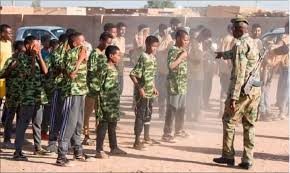
Children and women are among the most affected by the conflict. Children have been exposed to violence, deprived of education and healthcare, and in some cases recruited into armed groups. Meanwhile, widespread sexual violence has been reported against women.
According to estimates by UNICEF, millions of children in Sudan have been directly affected by the war, whether through displacement or the collapse of basic services such as education and healthcare. The agency warns that the continuation of the conflict and the deterioration of humanitarian conditions.
threatens the future of an entire generation
Under normal circumstances, Ramadan in Sudan is associated with cherished traditions that children eagerly anticipate—participating in preparing iftar meals, playing in neighborhoods after Taraweeh prayers, and visiting relatives and neighbors. But these traditions have largely vanished for children now living in displacement camps or areas lacking even the most basic services.
In Al Jazirah State, which has received large numbers of displaced people during the War, Fatima Abdullah, a mother of two, says her children are struggling to adapt to their new reality.
“Before the war, they went to school and played with their friends during Ramadan after Taraweeh,” she explains. “Now they spend their days in the shelter without education or activities.”
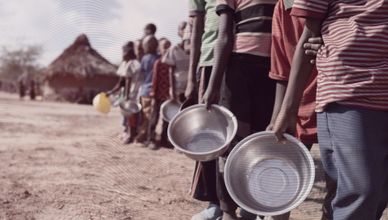
The suffering of children is further compounded by worsening food insecurity. The World Food Programme warns that millions of Sudanese are facing acute levels of hunger, placing children at heightened risk of malnutrition—particularly in displacement areas where food supplies are scarce.
In one displacement area in Darfur, Mohamed Adam, a father of four, says providing food during Ramadan has become a daily struggle.
“My children sometimes ask why there isn’t enough food like before,” he says. “We try to reassure them, but the situation is very difficult.”
Deteriorating Conditions for Children
Abdelqader Abu, Secretary-General of the National Council for Child Welfare, said children in Sudan are facing extremely dire humanitarian conditions, particularly in terms of food and health—especially in areas controlled by the RSF, where the flow of medical and food supplies has been severely disrupted.
In an interview with Sudan Tribune, Abu said that road closures and the breakdown of supply routes between states have led to acute shortages in healthcare and food services, directly affecting children’s well-being.
He noted that nearly three years of ongoing conflict have significantly worsened conditions for children, with approximately 85% affected by health, food, and education crises in several states—both in relatively safe areas and conflict zones.
The war has also devastated the education sector. Abu reported a sharp rise in school dropouts, with more than 85% of children experiencing prolonged disruption to their education. Learning loss has reached an estimated three million children.
The council has recorded alarming figures on the impact of the war on children. More than 1.013 million child deaths have been linked to malnutrition, in addition to around 1,000 deaths due to hunger. At least 700 children have been reported missing.
Abu further revealed that approximately one million children have been killed as a result of involvement in fighting, while 315 children have been injured. Around 1.16 million children have been recruited in areas under RSF control.
The conflict has also displaced vast numbers of children. Around two million children are internally displaced, while 1.115 million have fled as refugees to neighboring countries.
Additionally, the council documented 825 homeless children and 313 children separated from their families during displacement.
Caring for War-Affected Children
Abu said the council is working with partners to support children without parental care. In cooperation with the International Committee of the Red Cross and UNICEF, 101 children have been placed with foster families.
A total of 198 children without parental care have been identified. Meanwhile, 313 children were relocated from Khartoum to Wad Madani and then to Kassala, where 302 were integrated into foster families under government supervision.
Further interventions include the placement of 101 children in Kassala and River Nile states, as well as 51 children in Hatab, in coordination with the Sudanese Armed Forces, the Family and Child Protection Unit, and civil society organizations. The council continues to monitor conditions in areas recently retaken by the army.
Health Support Programs
Abu said the council is implementing healthcare support programs for children without parental care, in collaboration with the Zakat Chamber, the Ministry of Human Resources, and the National Health Insurance Authority.
These programs include providing sustainable health insurance cards to foster families—three per household—with the government covering all healthcare costs for sponsored children.
The Psychological Toll of War
Social affairs expert Dr. Najla Abdel Mahmoud Ahmed warned that war and displacement during Ramadan have deep psychological and social impacts on children.
She explained that Ramadan in Sudanese society is typically associated with communal traditions and social activities that foster a sense of belonging and joy among children—such as family gatherings and playing with friends after Taraweeh prayers. However, war and displacement have deprived many children of these experiences.
“The loss of home, school, and a familiar social environment can create feelings of isolation and instability,” she said, adding that this may affect children’s psychological and social development in the long term.
She stressed that families and communities still play a crucial role in mitigating these effects by preserving simple Ramadan traditions and creating as safe an environment as possible for children, even amid displacement.
For many children, however, this Ramadan remains profoundly different from those they once knew. The simple joys that once filled their days have been replaced by a harsh reality imposed by war and displacement.
As Sudanese families continue to observe Ramadan under extraordinary circumstances, hope remains that the war will one day come to an end—allowing children to return to their schools and neighborhoods, and to reclaim the true spirit of Ramadan.
This report, produced by Sudan Tribune and republished by the Sudan Media Forum and its member organizations, highlights the devastating reality facing Sudanese children after three years of war. It reveals shocking figures, including that around 85% of children are affected by health, food, and education crises, with a similar proportion experiencing disrupted schooling—resulting in an estimated three million children suffering from learning loss.
The report also documents over 1.013 million child deaths linked to malnutrition, around 1,000 deaths due to hunger, and 700 missing children. Additionally, approximately one million children have been killed due to involvement in fighting, 315 injured, and about 1.16 million recruited in RSF-controlled areas.


