
Sudan Media Forum
Khartoum, July 20, 2025, (Aljareeda Newspaper) – Halima was born in a displacement camp, a refugee from the 2003 Darfur war. Her father, whom she never met, was a rebel who “took up arms against the authority” and never returned. The camp was her entire world, her family’s past a mystery glimpsed only in her mother’s sad eyes and the hushed stories of women on moonlit nights.
She married and built a life with her husband and daughter in what she considered a homeland, but the government still called it a displacement camp. Then, after years of relative stability, the war of April 15th erupted. Once again, Halima is a refugee, forced into a new camp and yearning for the home she lost.
The Search for Safety
Sudan’s recurring wars have spawned sprawling settlements that lack basic necessities. While offering some food, rudimentary healthcare, and a semblance of safety near UN “blue berets” and aid workers, these havens are proving temporary. As cities and even the surrounding camps become battlegrounds, a new wave of evacuations to yet more camps has become necessary.
Reports from “Emergency Rooms” in North Darfur and Kordofan states reflect the depth of the humanitarian crisis. Skyrocketing prices and a lack of cash due to sieges have driven thousands to flee the risk of death from hunger and join new displacement camps.
The International Organization for Migration (IOM) reports that insecurity in North and West Kordofan has forced over 30,000 people from their homes. Hostilities in North Darfur continue to drive displacement, with fighting in El Fasher alone uprooting more than 400,000 people since April, most fleeing to the Tawila area.
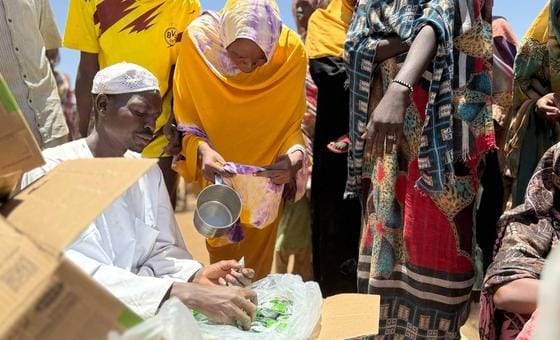
In the last month, nearly 8,000 displaced people from North Darfur arrived in the Al-Dabba locality in the Northern State, according to local authorities. They noted the influx has strained already limited resources, impacting access to shelter, clean water, food, and healthcare.
A Call for Help
The General Administration for Displaced Persons and Refugees Camps in Darfur has launched a distress call for urgent intervention. Ishaq Mohamed Abdullah, head of the camps, stated the humanitarian situation is “rapidly deteriorating,” citing the ongoing war and severe shortages of health, water, and education services. He fears “more deadly disasters” with the onset of the rainy season, especially with a cholera outbreak in Darfur.
Abdullah called for immediate provision of emergency shelter materials, food to combat famine and malnutrition, and medical supplies, particularly for cholera. He also stressed the need for livelihood opportunities to reduce violations against women and combat youth unemployment.
The Search for Solutions
According to economist Suleiman Mohamed Othman, the war has shattered the country’s economy. “With 80% of economic projects halted, markets shut down, and the civil service collapsed, simply getting food is a complex and perilous task,” he said. For the displaced, camps offer the only chance at a meal and a degree of security.
Othman noted that leaders on both sides have failed to ensure economic stability. He praised a UN Food and Agriculture Organization (FAO) initiative to distribute seeds to 1.5 million farming families as “a successful step to restore productive activity and to besiege the famine threatening Sudan.” In West Darfur, reports indicate over 750,000 people—more than half the population—face acute hunger.
The seed distribution, supported by the UN Central Emergency Response Fund and the European Union, is a lifeline. “Planting seeds means planting hope for food,” said FAO Director-General Qu Dongyu. “This isn’t just a hunger crisis; it’s a race against time to save lives.”
Protection of Civilians
Economic stability and the return of displaced people to their villages hinge on an end to the fighting. The UN Secretary-General’s Personal Envoy for Sudan, Ramtane Lamamra, is intensifying diplomatic efforts to de-escalate the conflict and push for a political solution.
The displaced endure alarming conditions in a nation that war has turned into one vast camp. The economy is in freefall, leading to extreme poverty, malnutrition, and a scarcity of life-saving medicine. As the conflict spreads, it threatens to uproot thousands more, forcing them to flee before they are crushed—a fate Halima knows all too well, living a life haunted by the father she never met.
The Sudan Media Forum and its member institutions publish this material, prepared by Aljareeda newspaper, to reflect a state of chronic human suffering in Darfur’s displacement camps. For more than 20 years, safe villages have been abandoned for the perceived safety of camps. Now, even those sanctuaries are failing, offering little more than a fragile illusion of security.


