
Sudan Media Forum
by Hawa Rahma
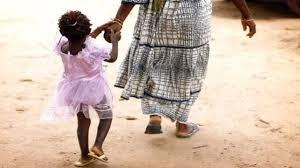
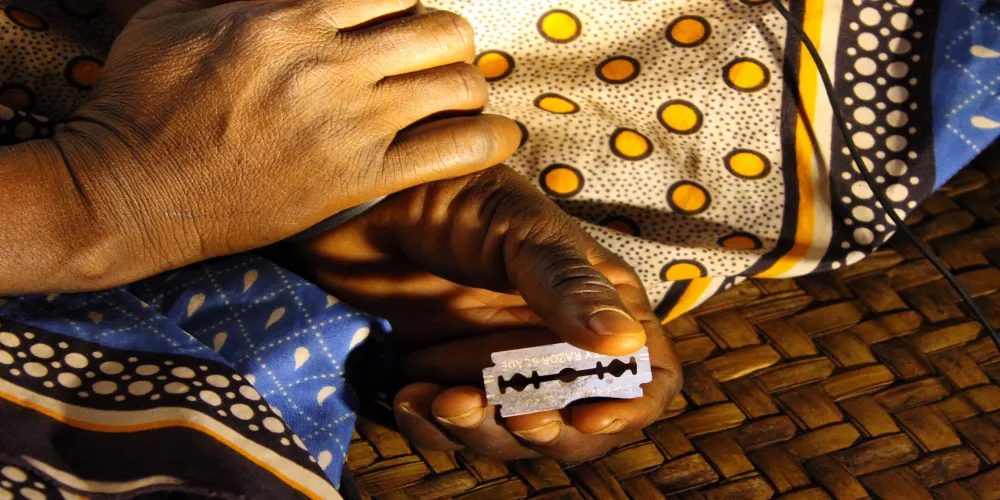
October 22, 2025, Khartoum (Al-Alag Center) – Female genital mutilation (FGM), a harmful practice targeted by decades of intense eradication efforts, has recently re-emerged as a consequence of the economic, health, and social crises stemming from the war.
The war that began on April 15, 2023, has brought not only death, destruction, and displacement but has also revived harmful practices that Sudanese initiatives have long fought to eradicate, chief among them FGM and child marriage. The most prominent of these is the “Saleema” initiative, which has made significant strides in combating the custom with support from UNICEF, the National Council for Child Welfare (NCCW), various civil society organizations, and welfare institutions.
A challenge and a commitment to eradication
The commitment to eliminating this phenomenon through community awareness remains steadfast. The “Saleema” initiative has advanced this cause through various programs on media and social networking sites, particularly community radio in several states and localities.
In a previous interview on maternal health, legal midwife Shaza Sabt identified FGM as a key factor in the deaths of young girls married below the legal age. “The war has exacerbated the phenomenon of child marriage and has also led to an increase in FGM cases in the absence of legal oversight,” she added.
During a community dialogue in Red Sea State, several women raised the issue of FGM, confirming that the practice persists among some families, performed away from public view. They noted that eradicating this custom requires continuous awareness efforts that clearly explain its health and social risks.
Dialogue for change
Arwa Mohammed of the Child Development Foundation (CDF) said that while she faced no direct opposition during awareness campaigns, she felt some participants remained unconvinced by the messages. “I worked in several areas where extensive discussions on FGM took place,” she said. “Some participants brought up what is known as ‘Sunna circumcision,’ but we stressed during our dialogues that all forms of FGM must be completely abandoned.”
Arwa noted that many older women shared their personal suffering from FGM and expressed a sincere desire to abandon the practice for good.
She also highlighted awareness campaigns in the Atbara locality, run by the CDF, which focused on FGM and child marriage. The campaign targeted women and children in the Al-Fadlab area, seeking to raise awareness by focusing on mothers due to their significant influence on family and community decisions. The campaign reached 24 women and 54 girls, including 19 aged 7-10 and 35 aged 11-14.
In a related effort, Mohammed Ibrahim of the Sadagat Charity Organization reported on a program with UNICEF that trained 129 community facilitators for the “Saleema for Communication and Renewed Saleema” program in 2024 and 2025 in the localities of Dongola and Wadi Halfa in the Northern State.
He explained the program is part of a social protection initiative for children’s rights across 14 communities in Wadi Halfa and 15 in Dongola. It utilizes the “Saleema” training manual, which emphasizes communication skills, community dialogue management, and the use of storytelling to persuade individuals.
These efforts, he noted, led to the collective abandonment of FGM in six communities during 2024: the old housing district and Block 11 in Wadi Halfa, and Al-Salim, Al-Khouli, Al-Omda, and Haj Hassan in Dongola.
In 2025, community facilitators continued their work through 980 dialogue sessions, leading to new public declarations of collective abandonment of FGM.
Women pay the price for lawlessness
Social researchers believe that war directly impacts communities by creating a vacuum of law and oversight, leading to chaos and insecurity. They point out that some fragile communities quickly revert to harmful practices like child marriage and FGM—physical violations for which women and girls pay the highest price. They stress the need for concerted efforts to protect these groups through awareness programs and advocacy campaigns on community radio, social media, and other platforms.
The National Council for Child Welfare stated it is working with partners on a specialized methodology to address all forms of violence and enforce Article (141-b) of the 1991 Criminal Act, which criminalizes FGM. The article was added in a 2020 amendment, approved by the Sovereign and Ministerial Councils as part of broader legal reforms to protect women and girls. The Council is also working to raise social awareness and develop impactful media to ensure a safe childhood where girls can enjoy their full rights, protected under the national law and the Child Act of 2010.
Local communities still fear a regression to harmful practices tied to local customs and beliefs. Some attribute this to the fact that awareness movements remain limited in scope. Active youth groups are calling for expanded awareness campaigns in closed communities, urging the use of available media to advocate for the elimination of customs that harm women of all ages. They also stress the importance of activating existing laws and enacting new deterrents to combat these practices.
The Sudan Media Forum and its member institutions are publishing this article, prepared by the Al-Alag Center for Press Services, to highlight the resurgence of harmful practices in Sudan, such as child marriage and especially female genital mutilation. These trends are seen as a consequence of the war and the accompanying absence of law and oversight. Despite the challenges, civil society organizations and initiatives continue their efforts through awareness and community dialogue to promote the collective abandonment of these practices.


