
Sudan Media Forum
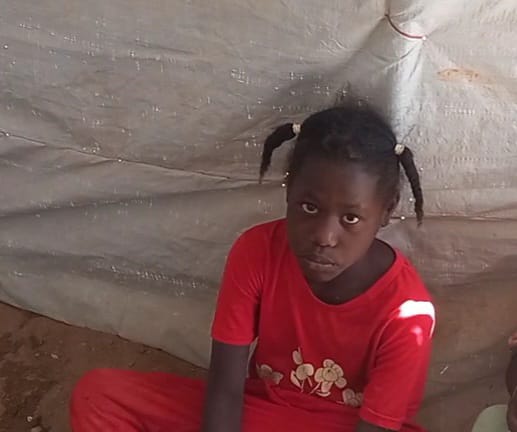
Al-Affad, March 14, 2026 (Sudan Tribune) – War in El Fasher, the capital of North Darfur State, shattered the life of eight-year-old Mishkat, leaving members of her family dead, injured, and displaced. Along with other survivors, she fled more than 1,200 kilometers, enduring horrors and abuses along the way.
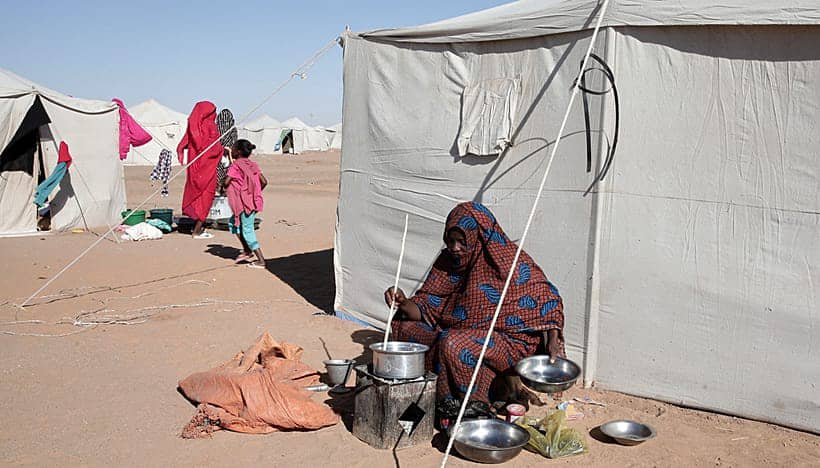
The battles in El Fasher turned Mishkat’s life upside down. She lost her mother and two siblings and embarked on a desperate journey for survival that eventually brought her to a new and unfamiliar world—living in fear inside a tent at Al-Afad displacement camp in Northern State, northern Sudan.
Mishkat’s story is one among thousands of tragedies experienced by children caught in the armed conflict between the Sudanese army and the Rapid Support Forces (RSF) in El Fasher. RSF forces had besieged the city with overwhelming military power before eventually taking control in late October last year. Following the takeover, widespread abuses were reported, including killings, looting, rape, and arbitrary detention targeting women, children, and the elderly.
Death Everywhere
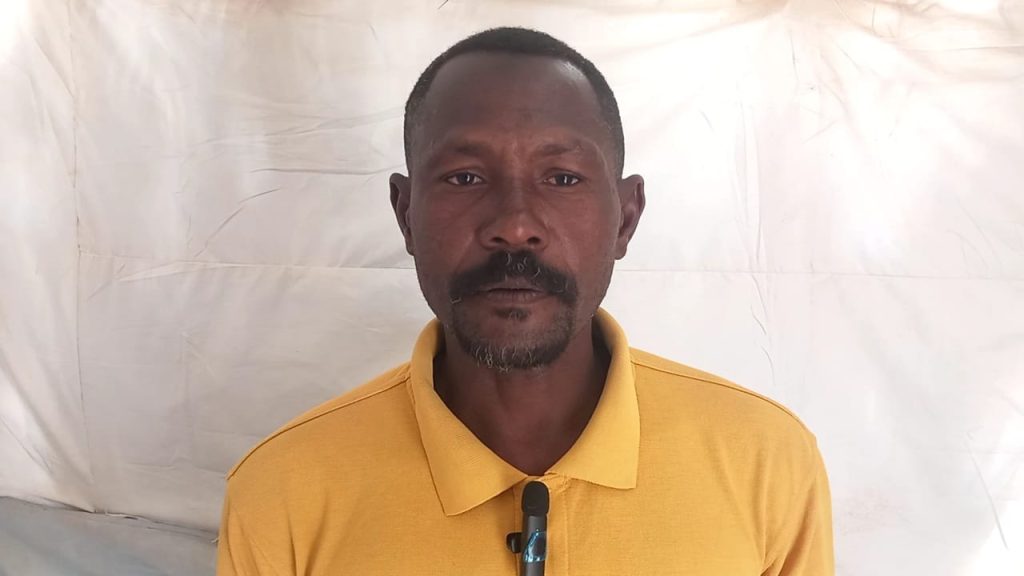
Mohieddin, Mishkat’s father, told Sudan Tribune, tears streaming down his face:
“In early April 2025, my wife was killed when RSF shelling hit our home. A month later, my eldest son, who was 12, had his leg amputated because of the same artillery that killed his mother.”
He continued: “At that moment, I felt the weight of responsibility to protect the four children I still had alive, including Mishkat, the youngest. So we decided to move to fortified buildings inside Omdurman Islamic University in El Fasher, hoping to escape the heavy bombardment that intensified in the weeks before the city fell.”
“We stayed there for a few days, believing it was a safe refuge,” he added. “But a strategic RSF drone struck the building. I lost two more of my children, along with other civilians who had taken shelter there searching for safety.”
Mohieddin said the scene was terrifying as people screamed while bodies lay scattered and the smell of blood filled the air. This occurred only days before the city fell. After RSF forces seized control of El Fasher, civilians began leaving the city in groups.
two sons in the battles of El Fasher
Run Over by Vehicles
Mohieddin described the horrors they faced during their escape from eastern El Fasher. “We were stopped in an open area and filmed in live broadcasts. After filming us, they began running civilians over with military vehicles, killing dozens on the spot,” he said.
“I quickly tried to save Mishkat from being dragged. I carried her while also helping my injured son so they could survive. But they didn’t leave us alone. They opened fire on us from behind. A bullet lodged in my back and is still there today. I survived death by a miracle.”
Psychological Trauma
Mohieddin continued recounting his ordeal, saying Mishkat went into shock and was unable to speak throughout their long journey until they arrived at Al-Afad camp. Once there, she was placed under psychological care after losing her ability to speak for more than a month due to severe trauma.
Her father says she has gradually begun to recover but still suffers from nighttime panic attacks. “She is better now than before,” he said.
Mishkat is far from the only child suffering the effects of trauma. Hundreds of children have yet to receive adequate psychological care after witnessing killings and abductions carried out by RSF fighters—violations that were sometimes filmed by the perpetrators themselves on their mobile phones.
Limited Access to Psychological Care
Medical sources in Al-Afad camp told Sudan Tribune, speaking on condition of anonymity, that the psychological conditions of children like Mishkat are extremely complex. Losing parents, witnessing the deaths of siblings, and surviving armed violence leave deep psychological scars that are difficult to overcome without specialized support.
Dr. Mohammed Ismail, who works at a clinic run by the Qatar Red Crescent inside the camp, confirmed this assessment.
“The camp receives a large number of psychological cases every day among children and women who have experienced violence, including cases involving the rape of minors,” he told Sudan Tribune. “We are providing an intensive psychological treatment program to help survivors recover. The scale of trauma in the camp is enormous.”
According to him, around 2,000 displaced people in the camp suffer from psychological disorders and require continuous care.
Meanwhile, a staff member from an international relief organization—who requested anonymity—said that many children suffering trauma have lost their family support systems. Treating such cases requires long-term programs focused on restoring psychological and social stability among displaced children—support that remains insufficient so far.
An Elderly Woman in a Sea of Grief
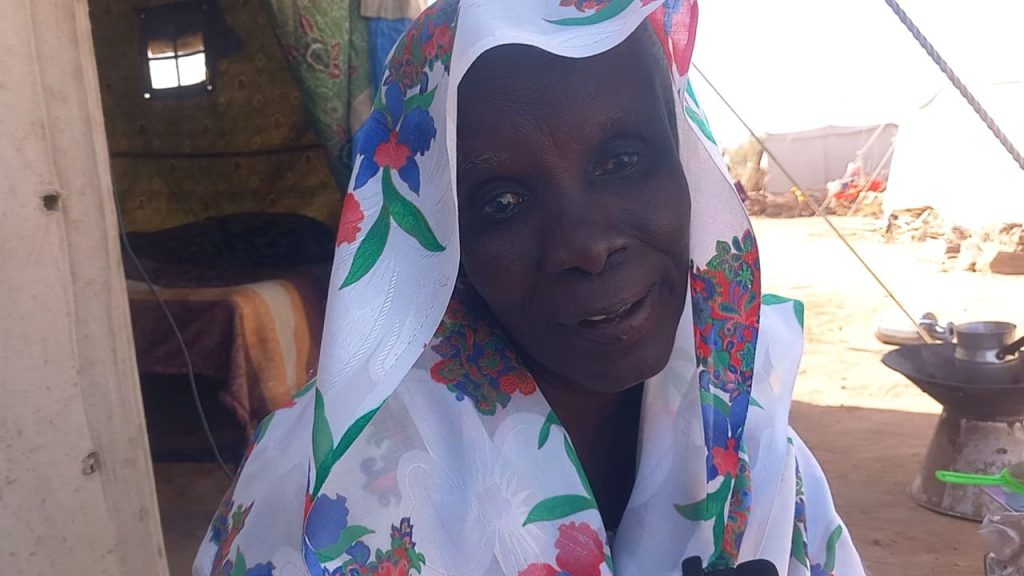
Inside a tent in the southeastern section of Al-Afad camp, 73-year-old Khadija sat overwhelmed by grief. With her head bowed toward the ground and prayer beads in her hands, she murmured quiet prayers, hoping for patience after losing three of her sons in the inferno of El Fasher as they tried to flee the city during its takeover by RSF forces.
One of her sons was killed by shelling, while two others were taken to an unknown location. She only later learned their fate when her daughter, Taysir, saw them in a video circulating online during their detention.
Khadija told Sudan Tribune that one of her sons died in detention from hunger and cholera, while the fate of the other remains unknown.
She received news of the second son’s death just one day after arriving in the town of Al-Dabba in Northern State, before she had even recovered from the exhausting journey that drained her frail body.
Her eldest son, she said, left behind four children without a provider after his death. They are now living with their mother in the town of Tawila, about 60 kilometers west of El Fasher.
The Struggle to Survive
In addition to losing relatives during the fighting or along the escape routes from Darfur, displaced families from El Fasher to Al-Afad camp face another painful reality: the fate of the forcibly disappeared, prisoners, and missing relatives, as families have been scattered across El Fasher, Tawila, Jebel Marra, and Al-Afad in northern Sudan.
One displaced man, identified as “M.A.”, told Sudan Tribune that he had to part ways with his brother near the village of Qarni, close to El Fasher. His brother chose to head toward Tawila, while he fled north with his children.
He said he occasionally contacts his brother in Tawila to ask about a third brother who has been missing since RSF forces overran El Fasher. “We hope to learn his fate so we can finally find peace of mind and stop thinking about what may have happened to him,” he said.
The stories of this displaced man, along with the tragedies of Mishkat and Khadija, represent only the tip of the iceberg of thousands of untold human stories from civilians who fled El Fasher or lost relatives to RSF forces—either through deliberate shelling or direct killings.
Today, more than 25,000 displaced people live in Al-Afad camp in northern Sudan, struggling to survive despite severe psychological and living hardships, according to the camp’s head, Rami Abdel Rahim.
Abdel Rahim told Sudan Tribune that the camp currently hosts 25,800 displaced people who fled Darfur after the fall of El Fasher to RSF forces. The influx of tens of thousands of people into Al-Dabba locality—both inside the camp and within the town itself—has left displaced communities facing extremely fragile humanitarian and health conditions, despite ongoing efforts to provide shelter, food, and medical services.
The testimonies of survivors from what many describe as the inferno of El Fasher stand as stark evidence of the scale of the humanitarian suffering endured by civilians displaced from the city.
The urgent need for humanitarian intervention and sustained psychosocial support for survivors—especially children who have borne the heaviest burdens of the war—remains clear.
This report is published by the Sudan Media Forum and its member institutions and was prepared by Sudan Tribune. It serves as a reminder of the ongoing tragedy resulting from the battles that ended with RSF forces taking control of El Fasher. More than 25,000 displaced people—many of them women and children—continue to endure harsh humanitarian conditions in Al-Affad camp alone.


