
Sudan Media Forum
Amira Mahjoub
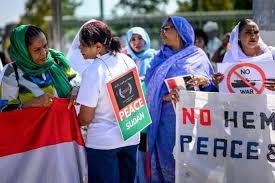
Port Sudan, April 25, 2026 , (Al-Alaq Press Services Center) — The women’s workshops that concluded in April 2026 were not an isolated event; rather, they were an continuation of a gradual process that began in September 2024, when UN Women, in collaboration with its partners, launched the first rounds of capacity-building for Sudanese women in the fields of dialogue, mediation, and negotiation.
From September 9 to 12, 2024, the Ugandan capital Kampala witnessed the launch of this process through a training workshop that brought together participants both in person and online from Port Sudan. The workshop focused on equipping women with the technical skills necessary to participate in peace processes, while adopting a gender perspective that reflects the realities and needs of women.
Laying the Foundation: From Capacity Building to Vision Formation
That workshop established a knowledge base, with participants gaining a deeper understanding of the complexities of peace processes and the importance of integrating gender issues into negotiation tracks. It also helped build communication networks among journalists, activists, and lawyers, despite structural challenges, most notably marginalization, discrimination, and social barriers.
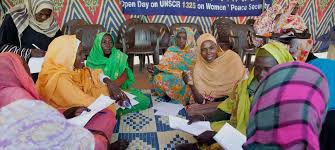
This accumulation of knowledge later translated into a series of five training courses held between December 2024 and April 2026, led by Sudanese and international experts. These trainings moved participants from passive recipients to active contributors, helping to shape a unified feminist negotiation paper that reflects Sudanese women’s priorities.
From the Margins to the Center of Influence
One of the most significant transformations in this process was the shift of women from being trainees to active agents in shaping the peace agenda. The negotiation paper focused on key issues including political participation, protection, justice, the humanitarian situation, and economic empowerment, while calling for no less than 50% representation of women at all levels of negotiation.
Berlin 2026: From Training to Proposing Solutions
In a notable development, the outcomes of this process went beyond training and theory, reaching international platforms. At the Berlin Humanitarian Aid Conference for Sudan held on April 15, 2026, a group of Sudanese women from diverse cultural, political, and geographic backgrounds presented a comprehensive de-escalation paper, reflecting the maturity of this process and its evolution into practical advocacy and pressure tools.
A Feminist Preamble: De-escalation as a Humanitarian Necessity
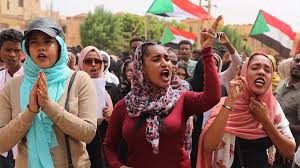
In their paper, the participants emphasized that the war, now in its fourth year, has imposed a catastrophic humanitarian reality on women and girls, making de-escalation an urgent necessity—not only to contain the crisis but also to pave the way toward sustainable peace based on gender justice.
They stressed that de-escalation represents the dividing line between continued collapse and the possibility of restoring stability, through ending violence, creating space for dialogue, and ensuring the protection of civilians, especially women and other vulnerable groups.
Conflict Hotspots… and Priority for Intervention
The paper identified five key regions for de-escalation: Darfur, Kordofan, Blue Nile, South Kordofan, and West Kordofan, as the areas most affected by the conflict. It highlighted the escalation of violence against women, the collapse of health services, and worsening sieges, which have led to rising maternal and child mortality rates and deteriorating livelihoods.
Clear Demands… and Direct Messages
The women put forward a set of key demands, most notably:
An immediate halt to aerial and artillery bombardment and lifting sieges on cities.
Opening safe humanitarian corridors and involving women in the planning and distribution of aid.
Establishing mechanisms to monitor and document gender-based violence.
Ensuring women’s access to health and legal services, especially survivors of violence.
Prohibiting child recruitment and clearing civilian facilities of military presence.
Involving women in de-escalation processes, monitoring, and implementation.
Releasing arbitrarily detained individuals and exchanging prisoners as a confidence-building measure.
Supporting local women-led mediation initiatives and strengthening the role of media in advocacy.
The paper also called for linking de-escalation to a comprehensive political process that guarantees equal participation of women, while urging the international community to take measures to curb arms flows and impose sanctions on those benefiting from the war economy.
Ongoing Recommendations… and an Incomplete Process
Despite this progress, the recommendations that have accompanied this process since its inception remain relevant, foremost among them: expanding women’s participation, ensuring protection for women in negotiation processes, supporting and funding women-led initiatives, and building broader alliances, including with supportive men.
Conclusion
Between the Kampala workshop in 2024 and the Berlin conference in 2026, it is clear that Sudanese women have not merely demanded participation; they have worked to build its tools, shape its agenda, and move it from training rooms to platforms of international influence. This process reflects a qualitative shift: from learning about peace to redefining it through a feminist perspective.
Amid the complexities of the Sudanese landscape, one question remains open: will these visions find their way to the actual negotiating table?
What is certain, however, is that women are no longer outside the equation. They have become a decisive force in shaping the future of peace in Sudan.
The Sudan Media Forum and its member institutions publish this material, prepared by Al-Alaq Press Services Center. It follows the conditions of Sudanese women during the war and their capacity to positively influence the future of Sudanese politics. The report covers the developments of an extended women’s workshop held over several months to build the capacities of Sudanese women in dialogue, mediation, and negotiation. It brought together journalists, activists, and lawyers, ultimately producing a comprehensive vision for de-escalation and ending the war in Sudan.


