
Sabah Mohamed Adam
Khartoum, April 27, 2026 (Al-Alaq Press Services Center) — As the war in Sudan enters its fourth year, since its outbreak on April 15, 2023, one of the world’s worst humanitarian crises continues to deepen, with women and girls topping the list of the most affected groups. Human rights organizations have documented multiple cases of sexual violence, including gang rape, sexual slavery, and abduction, with reports indicating that some victims are no older than 12 years.
In reality, conflict-related violence is no longer merely a byproduct of war; it has evolved into a systematic pattern targeting women’s bodies as part of the tools of the ongoing conflict between the army and the Rapid Support Forces, in what observers describe as a “war on women.”
This systematic nature of violence is underscored by what Tonderai Chikohwa, Senior Advisor in the Office of the United Nations Special Representative on Sexual Violence in Conflict, noted: “The massive scale of sexual violence in Sudan is not new; it has been a feature of the conflict for more than two decades,” pointing to the deep-rooted nature of these violations and their use as a tool of political violence.
Despite the frequency of UN and human rights reports, the international response remains below the scale of the catastrophe, deepening the suffering of victims and entrenching a climate of impunity. In this context, the United Nations Humanitarian Coordinator in Sudan, Denise Brown, warned of a “tragic repetition of violations” amid international failure to take decisive action against the parties to the conflict.
Darfur at the Heart of Escalation… and the Expansion of War
The Darfur region, particularly the city of El Fasher, the capital of North Darfur State, has witnessed unprecedented escalation in recent months, becoming a focal point of military operations and widespread violations. As the fighting has spread to other states, such as Blue Nile and North Kordofan, waves of mass displacement have intensified, alongside reports of systematic targeting of women and girls.
Following field visits to displacement areas, the UN Under-Secretary-General for Humanitarian Affairs, Tom Fletcher, relayed “horrific” testimonies about the use of sexual violence as a weapon of war, noting that the lack of humanitarian funding undermines response efforts and limits the provision of essential support to survivors.
A Complex Humanitarian Crisis: Displacement, Hunger, and Health System Collapse
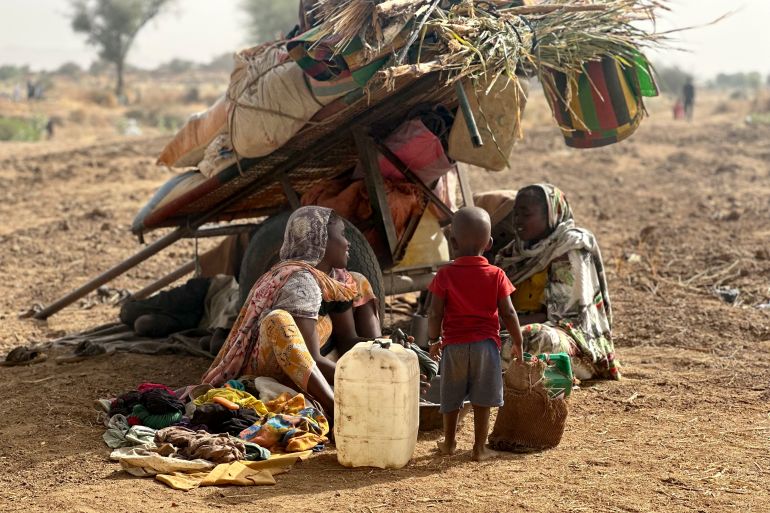
These violations have coincided with large-scale displacement, with hundreds of thousands fleeing within short periods, while millions live in prolonged displacement inside and outside Sudan. Recent estimates indicate that millions of children face acute levels of food insecurity, while women—especially pregnant women—suffer from an almost complete lack of basic healthcare services.
In displacement camps and shelters, women face harsh conditions, including lack of privacy and absence of protection, exposing them to additional risks—even in areas described as “relatively safe.”
Sexual Violence… A Systematic Weapon to Terrorize Communities
Human rights organizations, including Amnesty International, have documented multiple cases of sexual violence, including gang rape, sexual slavery, and abduction, while reports indicate that some victims are under 12 years old.
In a stark characterization, the UN Secretary-General’s Special Representative on Sexual Violence in Conflict described the situation as an “epidemic of sexual violence,” stressing that these crimes are deliberately used to dismantle and terrorize communities.
A recent report issued in April 2026 by the African Centre for Justice and Peace Studies also revealed an alarming escalation in these violations, noting that the bodies of women and girls have become a direct battlefield. The report clarified that these crimes are not random, but are used as tools for punishment and forced displacement, amid an almost complete absence of basic services, including medical care and psychological support, and a lack of access to justice.
It further pointed out that children are not spared from this tragedy; they have been subjected to displacement and deep psychological trauma, while some have been forcibly recruited into armed groups, threatening an entire generation that was expected to contribute to rebuilding the country.
Civilian Resilience and Women-Led Initiatives Despite Risks
Despite the severity of the crisis, civilians—especially women—do not appear merely as passive victims. Community initiatives led by resistance committees and women’s groups have emerged, working to organize food distribution, operate communal kitchens (“takyas”) and field clinics, and document violations.
These initiatives operate in a high-risk environment, where activists face direct threats. Nevertheless, these efforts continue to fill gaps in the humanitarian response amid the retreat of the state’s role and weak international intervention.
Impunity… and the Deep-Rooted Nature of the Crisis
The escalation of current violence is linked to a long history of impunity dating back to the Darfur conflict in 2003, where those responsible for crimes—including sexual violence—were not seriously held accountable.
This failure to achieve transitional justice has contributed to entrenching a culture of impunity and encouraged the recurrence of violations. Experts emphasize that incorporating justice issues—particularly gender-based violence—into any future peace process is a fundamental condition for achieving sustainable stability.
They also stress the importance of involving women in peace processes and decision-making, not only as victims but as key actors capable of offering comprehensive visions for peacebuilding.
“Feminist Justice”… A Campaign to Break the Silence
In response to this reality, the “Feminist Justice” initiative was launched by the women’s advocacy group “No to Women’s Oppression,” in partnership with civil society and human rights organizations, aiming to shed light on the conditions of women in Sudan, document violations, and break the silence imposed on victims.
The six-month campaign seeks to raise awareness of rights, push for effective accountability mechanisms, and build a broad solidarity network at local, regional, and international levels. It also calls for pressure on decision-makers to take urgent measures to ensure protection and justice.
In its launch statement on April 6, 2026, the campaign affirmed that what women in Sudan are experiencing is not merely a passing humanitarian crisis, but an urgent justice issue affecting the country’s present and future. The statement stressed the need not to treat women as a vulnerable group, but as rights holders whose access to protection, justice, and recovery must be ensured, while strengthening their participation and leadership in response efforts. It also warned against rejecting any settlements or humanitarian approaches that bypass women’s rights.
Amid the ongoing war, feminist justice remains an urgent demand—not only to deliver justice for victims, but also to break the cycle of violence and build a peace that does not exclude women or deny them their right to justice.
The Sudanese Media Forum and its member institutions publish this material, prepared by Al-Alaq Press Services Center, to follow one of the world’s worst humanitarian crises, unfolding in Sudan, where women and girls top the list of the most affected groups since the outbreak of war between the army and the Rapid Support Forces. The report addresses documented cases by human rights organizations of multiple instances of sexual violence, including gang rape, sexual slavery, and abduction, noting that some victims are no older than 12 years.
Despite the high cost of the war on women, they do not appear as “passive victims.” Community initiatives led by resistance committees and women’s groups have emerged, organizing food distribution, operating communal kitchens and field clinics, and documenting violations.


