
Sudan Media Forum
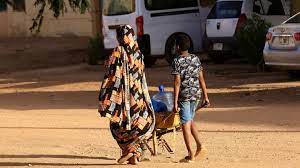
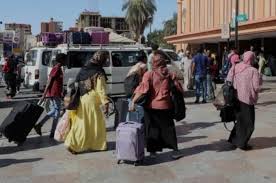
Khartoum, November 12, 2025 (Al-Alaq Center for Press Services ) – Forced to endure deteriorating conditions, citizens have been left with no options. After exhausting journeys of displacement from one state to another without humanitarian aid or relief, and having lost their livelihoods, many have chosen to return to their homes despite the destruction. Women and children are now the primary breadwinners, as employment opportunities for most young men have vanished.
Security Vacuum and Service Collapse
Residential neighborhoods in Haj Yousef and the broader East Nile locality remain plunged in total darkness and lack running water. The only exceptions are specific areas where residents have pooled resources to fund solar energy and water supplies.
The fear of home invasions and looting has become the primary source of anxiety for residents. They live in a constant state of vigilance and terror due to the power outages, while the proliferation of weapons among outlaws and escaped convicts poses an ongoing threat.
Residents of the affected areas report that near-daily demands for improved security and the restoration of services, directed at Khartoum State and local authorities, have met with a negligible response. Conversely, the State claims it is working tirelessly to enhance security and stability. In a statement released this week, authorities announced the arrival of electrical transformers, promising distribution to densely populated neighborhoods and critical service facilities.
Schools Without Sanitation
Following a closure of more than two years due to the war that erupted on April 15, 2023, several schools in the East Nile locality are suffering from the partial or total collapse of sanitation facilities. Continuous appeals for repairs have gone unanswered, leaving the burden of school maintenance on community efforts, despite the severe economic hardship families face.
Mawahib Mohamed, an English teacher, confirmed that the restrooms at her elementary school had completely collapsed. She noted that the school was forced to resume the academic year without a solution for rebuilding them. “We issued several appeals,” she said, “but received no response from either the Ministry or aid organizations.”
Afaf Mustafa, a teacher at the same school, added that it is heartbreaking to watch pupils suffer due to the lack of restrooms. She confirmed that staff had repeatedly appealed to various entities for construction assistance but found no avenue for help.
Under these conditions, parents also express frustration over rising tuition fees at private schools, which clash with the widespread loss of income and the high cost of living.
Enforced Disappearances and Death in Detention
Dozens of families have lost their sons in Rapid Support Forces (RSF) detention centers, where detainees face death through torture, starvation, or summary execution. Others remain missing without a trace, leaving their families to search for them in detention centers both inside and outside Khartoum State.
Hajjah Fatima lost her son-in-law, a former policeman, who died in RSF custody after being arrested at his home in East Nile. He had stayed behind with his wife and children to care for their grandmother. The family received news of his death without official confirmation and continues to hope the report is false. His three children, all under seven years old, still long to see their father again.
One mother has been waiting over a year for news of her two sons, who were forcibly disappeared after being abducted by the RSF. Another mother has lost three sons: two were killed, and a third died later under mysterious circumstances.
For many families in the area, the agonizing wait for the missing has become their primary burden. A wave of arrests by both the Army and the RSF has targeted local youth. Families are left with nothing but painful memories and tragic accounts of detention conditions and torture shared by survivors. While some fortunate detainees were released by the Army after being accused of “collaboration” and subsequently proven innocent, others remain missing, their fates unknown.
Fevers: A Second Front of Suffering
Fevers, specifically malaria and dengue, continue to ravage the citizens of East Nile. Although the spread of dengue has slowed, the proliferation of mosquitoes and other insects remains a life-threatening hazard. The Ministry of Health is conducting house-to-house inspections to drain stagnant water and monitor storage conditions to prevent vector-borne diseases.
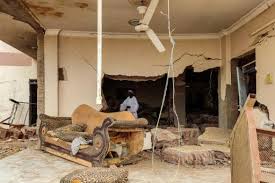
Abandoned homes have become a defining post-war feature and a source of health concerns, as weeds overgrow the properties and waste accumulates. Residents have emphasized the need for a comprehensive health survey of these empty structures.
Citizens have also called on the Ministry of Health to rehabilitate health centers and hospitals to provide services at nominal prices. This is crucial to prevent residents from being forced to travel to other states, some of which have exploited the plight of the displaced, further increasing their suffering.
Questions and Fears
The harsh conditions families endured during the final days of the siege—trapped amidst gunfire and artillery shelling—have instilled a lasting sense of terror, despite the relative calm today. People here hope for peace and the silencing of the guns; they dread the sound of bullets or news of battles, however distant. They are struck by frustration and disappointment whenever they hear statements calling for continued war.
Hassan, an elderly resident who lost his son in a tragic manner, said he hopes for nothing but peace. He does not want to see another young man die a gruesome death like his innocent son. His son, a teenager with no connection to the RSF or any other faction, paid the price for hatred and the rhetoric of racism and regionalism.
The atmosphere remains charged, yet communities continue to resist those seeking ruin and social disintegration. They cling to their history of peaceful coexistence, despite incitement and attempts to fuel hate speech between different groups. —
The Sudan Media Forum and its member institutions publish this material, prepared by the Al-Alaq Center for Press Services, to reflect the tragic reality lived by the citizens of East Nile amid a security vacuum and a lack of basic services. following repeated displacements, their suffering is exacerbated by economic collapse and the absence of humanitarian support. Tragedies continue to mount with the loss of loved ones in detention and the uncertainty surrounding the missing, alongside the spread of disease, while demands for security, peace, and the restoration of services remain largely ignored.


