
Sudan Media Forum
AL-DABBAH , November 4, 2025, (Sudan Tribune) – Dozens of displaced families from El Fasher are arriving daily at the “Hosh Mellit” center in Al-Dabbah, Northern State. They reach safety shattered by the loss of their young men and exhausted by 17 months of siege and combat.
Upon arriving at the Hosh Mellit reception center—located about 350 kilometers north of Khartoum—the new arrivals are transferred to the Al-Affad camp on the eastern bank of the Nile. The camp is currently undergoing urgent expansion to accommodate the massive wave of displacement triggered by the Rapid Support Forces’ (RSF) seizure of El Fasher, the capital of North Darfur, on October 26.
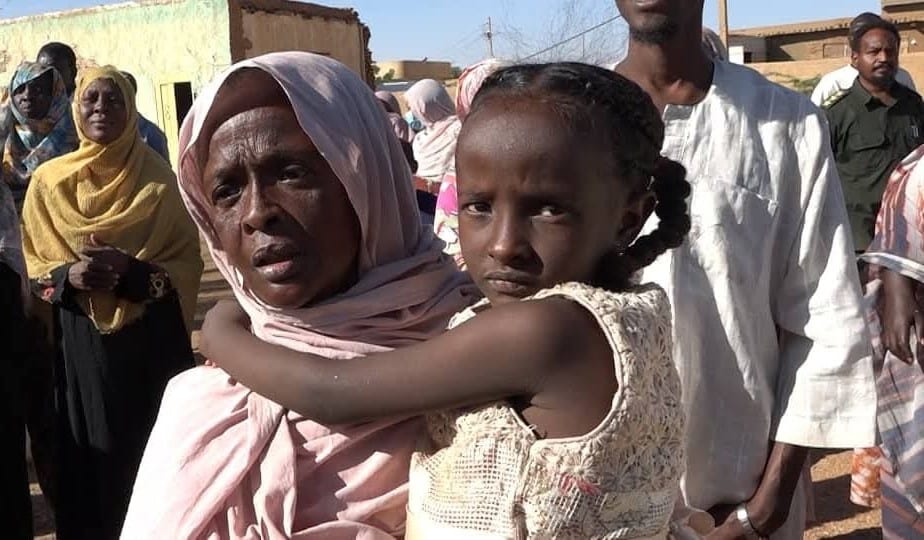
Scenes of mourning are pervasive. New arrivals are frequently seen receiving condolences for relatives killed during the final battles for the city, or for those who perished on the treacherous road to safety.
Most families reaching Al-Dabbah report missing relatives—primarily young men abducted by the RSF as families attempted to flee the city.
Families with missing loved ones largely shun the media, refusing to appear on camera or speak to the press. They fear that publicity could endanger their abducted relatives. Many displaced people explained that they believe kidnappers would double ransom demands if they discovered the victim’s family had spoken out.
Painful Accounts
Sudan Tribune spoke with a family whose women were wailing over the loss of two sons: one killed in the battles that led to El Fasher’s fall, and another who died during the escape. A third brother remains in RSF captivity in El Fasher.
“A,” a woman in her forties, recounted how RSF elements forcibly separated her 15-year-old son from her, ordering her to leave him behind and depart with the crowds of displaced people.
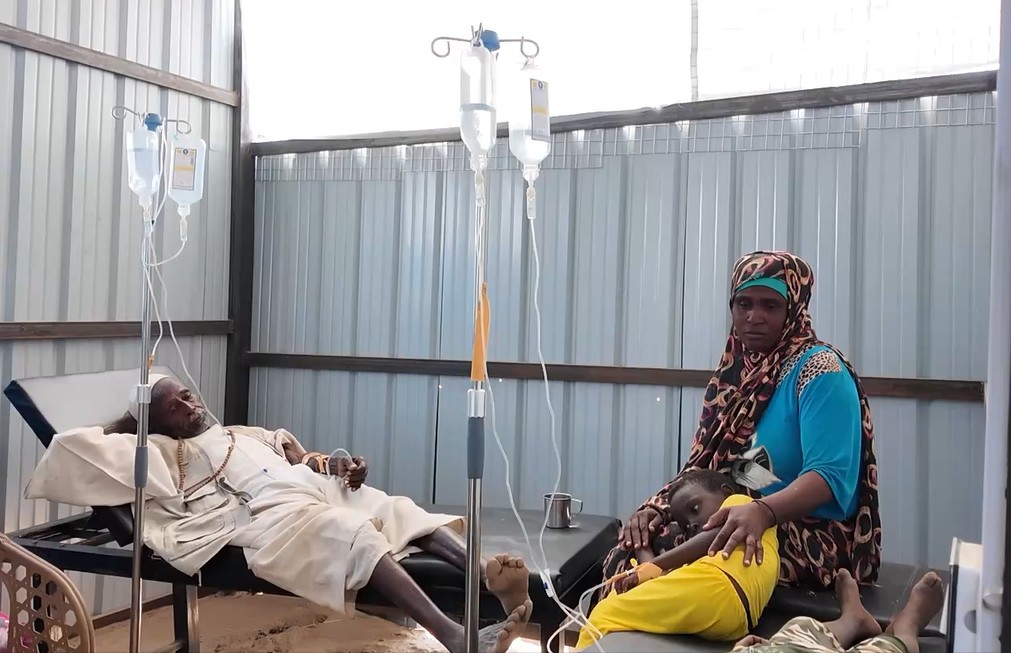
Dozens of children have arrived in Al-Dabbah without their families. These unaccompanied minors are receiving psychological support for the horrors they witnessed inside El Fasher and along the escape route.
Hiyam Omar, director of the Child Development Foundation’s Northern State office, told Sudan Tribune that the Hosh Mellit center is currently sheltering 85 unaccompanied children. She expects this number to rise significantly following the RSF takeover, as the influx of displaced people to Al-Dabbah—the primary destination in the Northern State—accelerates.
Sami Aswad, head of the UNFPA office for the Northern State and Darfur, told Sudan Tribune that projections indicate the potential arrival of 30,000 to 50,000 displaced persons from Darfur.
Violations on the Road
For civilians, the decision to flee the cities of Darfur and Kordofan was fraught with peril. The 600-kilometer escape route to Al-Dabbah is dotted with RSF checkpoints and immense danger.
Sahar Fadlallah, a displaced woman from En Nahud in West Kordofan, arrived at the Al-Affad camp with her two sick children. She said she chose displacement simply because “living under the Rapid Support Forces became impossible.”
Sahar told Sudan Tribune that RSF members storm homes in En Nahud to loot, noting they resort to killing “for money or over a woman.”
Arfa Makki recounted her ordeal to Sudan Tribune. RSF elements stopped her group as they fled El Fasher, robbing them of money and phones at gunpoint. Arfa noted she was “lucky,” as other displaced people traveling behind her were killed by the fighters.
She added that the RSF detained her and others in “Garni,” near El Fasher, for four days. She eventually managed to escape, walking for two days to reach the town of Mellit (65 kilometers north of El Fasher) before catching a truck to Al-Dabbah.
A Journey of Death
Amani Siraj (50) and her pregnant sister reached the Hosh Mellit camp after an arduous week-long journey involving travel on foot, animal-drawn carts, and aging trucks. The trip cost 1.2 million pounds (approximately $350) per person.
Amani told Sudan Tribune she witnessed the RSF attack on El Fasher two Thursdays ago—the assault that precipitated the city’s fall three days later on Sunday. She was wounded in her hand and left side by a shell that struck her home in the “First Class” neighborhood.
Forced to flee, Amani traveled to Tawila on foot and by donkey, then took “Buffalo” 4WD trucks to Soug Al-Arab in Kordofan. From there, her family boarded larger trucks to Al-Dabbah.
She laments that she has lost her life savings and is now entirely dependent on food, medicine, and clothing aid provided to the displaced.
Murtada Mohamed Adam, forced to flee El Fasher two days before its collapse, described the desperation: “Food ran out… there was no food at any price.” He told Sudan Tribune he had held out hope that the situation would improve, “but it became unbearable.”
Weeping, Murtada recalled being forced to leave his mother behind in Mellit, North Darfur, because the RSF targets young men there. He lacked the funds to help her travel to Al-Dabbah because the agent who usually facilitated their banking app transfers was killed in El Fasher on the day the city fell.
Yahya Abdullah Ishaq also reached the camp with his family of 11. He described how the RSF seized the Army’s 6th Infantry Division headquarters, placing citizens under crossfire from all directions and forcing them to flee before the official takeover.
He confirmed that his wife was killed by a drone strike—one of many UAVs deployed by the RSF against fleeing civilians. “During our exit from El Fasher to Tawila,” he said, “bodies littered the road.”
In the camps along the Nile, stories oscillate between loss and hope. A mother searches for a missing son, haunted by visions of his torture; a child wakes screaming from nightmares, missing the parents he left behind. These are the stories of the survivors arriving from the inferno, repeated with every new group reaching Hosh Mellit. Yet, amidst the wreckage, the will to survive remains stronger than the atrocities, as they wait for the guns to fall silent.
—
The Sudan Media Forum and its member institutions publish this material, prepared by Sudan Tribune, as a field report on the humanitarian tragedy of displaced persons fleeing El Fasher following the RSF takeover. It details the horrific violations faced on the escape route to the Northern State, the suffering of families searching for abducted sons, and the plight of unaccompanied minors. The report highlights the harsh conditions survivors face in the “Al-Dabbah” and “Al-Affad” camps as displacement numbers rise and the humanitarian situation deteriorates.


