
Sudan Media Forum
Amal Yahya, Lamia, Al-Souim
Khartoum / Nyala — April 15, 2026 (Jabraka News) – Since the outbreak of war in Sudan in 2023 between the Sudanese Armed Forces (SAF) and the Rapid Support Forces (RSF), the lives of thousands of civilians have been transformed into a cycle of violations, displacement, and fear. Among the most affected are women and girls, who have found themselves at the center of the conflict—caught between arbitrary detention, sexual violence, and social stigma.
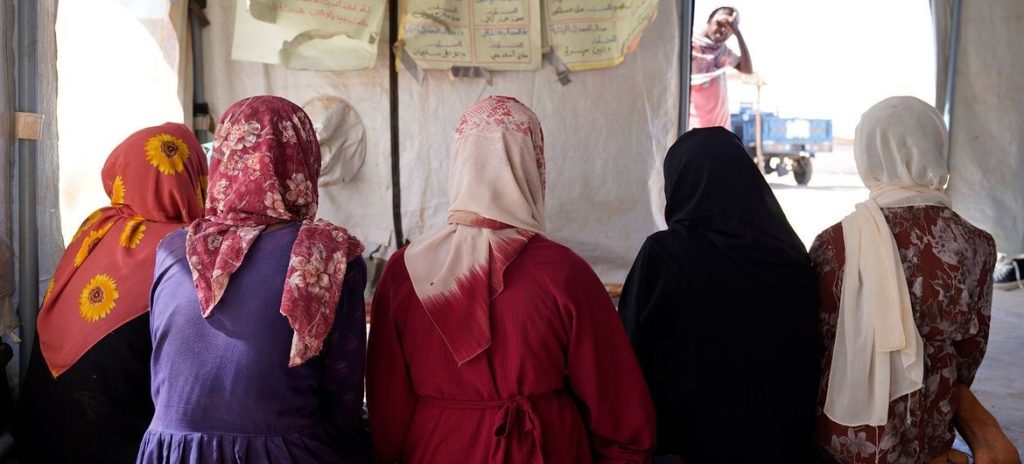
Four testimonies obtained by Jabraka News—under pseudonyms due to the sensitivity of their situations—reveal part of the suffering endured by women during the war. They shed light on violations committed in areas controlled by different parties to the conflict, amid the collapse of justice institutions and the diminishing ability of civilians to seek protection.
A War on Women’s Bodies
The war has not been confined to military confrontations in the streets; women’s bodies have become another battleground. Testimonies from local and international organizations point to a sharp rise in gender-based violence since the fighting began.
Sudan’s Combating Violence Against Women Unit documented dozens of cases of sexual assault during the early months of the war, while the United Nations Population Fund warned of increasing risks of sexual violence and exploitation against women and girls—particularly during displacement or in areas where services have collapsed.
Researchers note that the use of sexual violence in conflict is not new in Sudan, having been widely documented during the Darfur war since 2003.
Salma: A Victim of Both Sides
Salma says her life changed entirely after the war broke out in Khartoum. She had been running a small restaurant with one of her daughters before her life and that of her family turned into a series of fear and persecution.
She recounts that one of her daughters was assaulted by an RSF member after demanding payment for food he had taken from the restaurant, resulting in her arm being broken. On another occasion, an RSF member took Salma to a place known as “Negative Phenomena” near Kalakla Al-Laffa market, accusing her of being the wife of an army soldier, although she is unmarried.
What she describes as the most devastating moment came in July 2025, when RSF-affiliated collaborators attacked her home. They climbed over the wall and assaulted the family with beatings and insults. Her two daughters were raped during the attack.
The threats, she says, did not stop even after the army entered the area. Individuals she identified as former RSF members continued to attack her home and threaten her.
In April 2025, Salma says she was assaulted again—this time by individuals claiming to belong to the army—resulting in an eye injury, while her daughters were beaten with sticks inside the house.
She tried to file a complaint at a police station in Kalakla, but an officer told her to “come back later,” accusing her: “You are all Janjaweed collaborators living among them,” leaving her feeling completely unprotected.
Fear drove her at times to lift her daughters onto the rooftop at night so they could sleep safely.
In another incident, armed men attacked her home while a neighbor was visiting. He went to open the door but never returned. The next morning, she discovered he had been killed.
Salma later fled by climbing over the wall into neighboring houses. She and her three daughters, including a minor, were subsequently arrested. According to her account, the perpetrators in the neighbor’s killing—army-affiliated reservists—were arrested, but she and her daughters were detained a third time on charges of collaborating with the RSF.
“We remained in detention for months before the court acquitted us,” she said.
However, two of her daughters remain imprisoned on theft charges, which the family denies.
“We spent one month in Kalakla prison and five months in Al-Tayebat prison in Omdurman. We paid large sums to lawyers during the case,” she added.
After her release, Salma says her life has never returned to normal: “The way neighbors treat me has changed. I feel isolated after everything I went through.”
Khadija: “I Asked Them to Kill Me”
Khadija Bakhit says her life changed from the early days of the war. Her husband is an army officer, and the family lived in Kalakla, south of Khartoum.
After the fall of the Central Reserve camp in 2023, they decided to leave, but neighbors reportedly informed the RSF about them.
She recounts that the first force that raided the house behaved relatively calmly, but later armed groups treated them harshly—confiscating phones and preventing the family from leaving Khartoum.
“Raids kept happening. They took what little money we had and arrested my husband’s brother,” she said.
In August 2023, seven armed men stormed the house searching for her husband’s documents. After finding some, they beat her for attempting to hide them.
She was taken along with a neighbor to a site in Abu Adam, where they were interrogated before being released two days later.
She was later detained again with other neighbors in a building in Al-Amarat.
“They held us for days without food or water, in a filthy place,” she said.
“I was severely beaten until I asked them to kill me instead of torturing me.”
During detention, she says she witnessed another woman—a singer—being repeatedly assaulted.
Eventually, Khadija was transferred with other detainees to a site in Soba, where she was interrogated on charges of sending information to her husband. She was released after a month, after signing a pledge not to leave the neighborhood.
But her life after release remained unsafe. Her home was targeted for looting, and one of her daughters was beaten by an armed man.
Sara: Prison, Torture, and Illness
Sara Hamad was arrested by the army in Kalakla on charges of collaborating with the RSF.
She was held for a month in a police station before being transferred to Al-Tayebat women’s prison in Omdurman, where she remained for several more weeks.
She described detention conditions as harsh, citing limited food and difficulty accessing water.
“I was beaten during my imprisonment. Some officers treated me more humanely than others. I also fell ill during detention and received no medical care throughout the three months I spent in prison,” she said.
She added: “Thank God, in the end, I was brought before a court, which acquitted me of all charges.”
Amani: From Escaping Death to Imprisonment
Amani Othman recounts her arrest while attempting to flee Zamzam camp in North Darfur.
She and a group of civilians left the camp at night in three vehicles heading toward Al-Afad camp via a desert route. One vehicle broke down, and when passengers used light to repair it, an RSF patrol spotted them.
“We told them we were civilians, but they opened fire immediately,” she said. Two people were killed on the spot.
The survivors were taken to Al-Malha, where men were separated from women and children.
“They forced the men to cook for RSF soldiers,” she added.
After three days, they were transferred to Nyala. Women and children were taken to Nyala prison, while men were sent to Digris prison.
Amani described the conditions as extremely harsh, with severe food shortages and children crying from hunger.
“Sometimes we ate only sorghum porridge with okra sauce, salt, and water,” she said.
According to her account, “some girls were taken from prison to officers’ homes under the pretext of providing services.”
Hundreds of Women Detained in Nyala
Violations during the war are not limited to isolated incidents. Rights reports indicate that detention centers in conflict areas have become sites of serious abuses.
In Darfur, testimonies have documented torture, arbitrary detention, and deprivation of food and medical care inside some RSF facilities.
A report by the African Centre for Justice and Peace Studies in March 2026 revealed that at least 643 women are being held in “Korea” prison in Nyala, South Darfur—an area under RSF control.
According to the report: 200 women are accused of collaborating with opposition groups. 247 were transferred from El Fasher without formal charges. 196 are accused of criminal offenses.
The report also documented harsh detention conditions, including food shortages, forced domestic labor for armed personnel, and extortion in exchange for release.
In one case, a family was asked to pay five billion Sudanese pounds for a woman’s release after she was detained in place of her husband.
Collapse of Justice in Wartime
The war has led to the collapse of much of Sudan’s judicial system, particularly in Darfur, where courts have ceased functioning in many areas, leaving a significant legal vacuum.
The UN Human Rights Council established an international fact-finding mission to investigate violations since the conflict began. Its findings indicate widespread abuses that may amount to war crimes and crimes against humanity.
Lawyer Alaa Ahmed told Jabraka News that women detainees’ rights are guaranteed under Sudan’s 2019 Constitutional Document and national laws, including protection from torture, access to healthcare, and humane treatment.
However, she noted a wide gap between legal texts and reality due to the war. Arbitrary detention and mistreatment have increased, and some women face serious charges that may carry the death penalty or life imprisonment, amid weakened legal safeguards.
She added that while laws guarantee fair trial rights—including protection from abuse and the right to know the reasons for arrest—the reality differs. Summary trials lacking due process have been recorded in government-controlled areas, while in RSF-controlled areas, there are effectively no judicial proceedings, with orders carried out without legal procedures.
Although mechanisms exist to file complaints about torture, including through prosecutors and prison authorities, their effectiveness is severely limited due to arbitrary detention, isolation, and lack of accountability.
Efforts to Release Female Prisoners
In January 2025, Sovereign Council Chairman Abdel Fattah al-Burhan ordered the release of around 400 women from Omdurman women’s prison.
Salma Ishaq, head of the Combating Violence Against Women Unit, said the move was part of efforts to review detainees’ cases and ensure fair trials.
However, testimonies gathered by Jabraka News indicate that hundreds of women remain in detention, particularly those accused of collaborating with the RSF.
A former detainee, Manal Jaber, said most of those released were charged with minor offenses such as alcohol sales or theft, while those accused of political collaboration remain imprisoned.
In a separate statement, Minister of State at the Ministry of Social Affairs, Salma Ishaq, denied the existence of unofficial detention sites for women in army-controlled areas.
She said prisons consist of shared rooms and verandas with adequate security and denied allegations of abuse, stating that detainees are treated equally, have access to phones, and receive medical care.
Regarding politically detained women, she said most are released after five months to a year, adding that even those sentenced to death have not been executed.
She also noted that legal appeals are ongoing in many cases and that lawyers and human rights organizations are allowed access to detainees.
Ongoing Arrests and Disappearances
In March 2026, media reported the arrest of several female activists and journalists in Nyala after attending a workshop on women’s rights, peace, and security. They were taken to unknown locations, and their fate remains unclear.
Emergency Lawyers issued a statement on March 5, 2026, calling for their immediate release and for authorities to disclose their whereabouts and allow access to families and legal counsel.
Reports also indicated that 260 detainees were released from Digris prison in Nyala in March 2025 under local authorities aligned with RSF leadership. It remains unclear whether any women were among those released.
Between War and Stigma
For women who survive detention or violence, the suffering does not end upon release. Many face social stigma and difficulties reintegrating into their communities.
Experts argue that achieving justice for women in Sudan requires broad legal and institutional reforms, alongside stronger protection measures and inclusion in peace processes.
But as the war continues and accountability remains absent, many fear these crimes will go unpunished—and that women’s testimonies will become yet another chapter in the memory of a war that has yet to end.
This report was published by the Sudan Media Forum and its member organizations, based on reporting by Jabraka News, to highlight the situation of women during the war between the Sudanese Armed Forces and the Rapid Support Forces, now in its third year. It presents testimonies from women detained in Khartoum and Nyala, documenting various forms of abuse, including arbitrary detention, unfair trials, and inhumane conditions. Hundreds of women remain in detention, awaiting an uncertain fate.
This report was produced as part of a gender-sensitive journalism workshop, supported by Internews.


