
Sudanese Media Forum
By Sabah Mohammed Adam
Khartoum, March 7, 2026 — (Al-Alag Press Services Center) – This year’s observance of International Women’s Day on March 8 comes under the United Nations theme “Rights, Equality and Empowerment for All Women and Girls.” In Sudan, however, the occasion arrives at a time when women face mounting challenges as the war continues and humanitarian conditions deteriorate, compounded by weakened state institutions and the erosion of justice and the rule of law.
Legal experts and women’s rights advocates say the theme of this year’s commemoration directly reflects the reality faced by Sudanese women. The ongoing armed conflict between the Sudanese Armed Forces and the Rapid Support Forces, which erupted in April 2023, has deepened the vulnerability of women and girls and intensified various forms of violence and abuse amid fragile protection and accountability mechanisms.
Multiple Forms of Violence
Human rights reports and discussions with legal and human rights experts indicate that Sudanese women have become among the groups most severely affected by the conflict. Various forms of gender-based violence have escalated, including conflict-related sexual violence, economic abuse, and digital violence.
Information from women legal activists points to around 52 documented cases of digital violence against women, reflecting the growing scale of online abuse. National legislation, however, still lacks clear provisions regulating cybercrime or establishing standards for digital evidence, such as emails or messaging applications.
Human rights specialists note that violence against women in Sudan is no longer limited to physical or sexual assaults. It increasingly includes online blackmail, defamation, and threats through digital platforms, posing new legal challenges in the absence of specialized legislative frameworks to address such crimes.
Legal experts also emphasize persistent gaps in some national laws, particularly regarding the comprehensive criminalization of sexual violence and the provision of adequate legal safeguards for women. These gaps limit the justice system’s ability to prosecute perpetrators and prevent impunity in a fragile political and security context marked by recurring crises and conflict.
A Gap Between Law and Practice
Human rights lawyer and activist Salwa Absam says Sudan does have legal texts that stipulate equality and non-discrimination, but reality reveals a clear gap between legislation and its implementation.
Absam notes that the weakened institutional capacity of justice institutions is among the most significant challenges, particularly as courts and police stations in conflict-affected areas have been damaged or destroyed. This is compounded by a shortage of trained personnel capable of handling gender-based violence cases.
In some war-affected regions, local reports indicate the complete absence of judicial or security institutions in several districts, leaving women without effective legal protection and making access to justice a complex and prolonged process.
Women also face social and security barriers that discourage reporting abuses, including fear of social stigma or retaliation, as well as complex legal procedures and the high cost of litigation.
Violence in the Context of War
United Nations reports have warned that the war in Sudan has led to an unprecedented surge in violence against women and girls. UN estimates indicate that millions of women face multiple risks, including sexual violence, forced displacement, food insecurity, and the collapse of essential health services.
Demand for protection services and support for survivors of gender-based violence has more than doubled since the outbreak of the conflict in April 2023, at a time when Sudan’s health system is experiencing widespread collapse, limiting survivors’ access to medical care and psychosocial support.
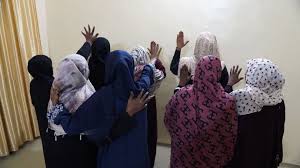
In a related development, a report published by the African Centre for Justice and Peace Studies on March 3, 2026 documented the arbitrary detention of at least 643 women in “Korea” Prison in Nyala, the capital of South Darfur, an area under the control of the Rapid Support Forces.
According to the report, detained women face multiple abuses, including arbitrary arrest, unfair trials, and detention under inhumane conditions. Among the detainees are 200 women accused of collaborating with opposing groups, 247 women transferred from El Fasher without formal charges, and 196 women accused of criminal offenses.
The report also documented harsh detention conditions, including food shortages and the forced domestic labor of some detainees for armed personnel. Cases of extortion in exchange for ransom have also been reported. In one instance, the family of a detained woman was asked to pay five billion Sudanese pounds for her release after she was arrested in place of her husband.
The Need for Comprehensive Reform
Salwa Absam, along with other legal experts, stresses that achieving justice for women in Sudan requires more than adopting new laws. It demands comprehensive institutional reform to ensure effective enforcement and implementation.
She highlights the need to develop effective protection mechanisms, including establishing a national referral system linking health, legal, and social institutions to provide integrated support services for survivors of violence.
Absam also calls for training judges, police officers, and prosecutors to handle gender-based violence cases with sensitivity, while increasing women’s participation within justice institutions and decision-making bodies.
She cites Blue Nile State as an example, where there is only one female judge and one female prosecutor serving a state with seven districts, some of which lack courts or police stations entirely — illustrating the scale of challenges facing the justice system.
She also notes that Sudan’s nationality law has undergone amendments but remains conditional, while no independent law specifically criminalizes sexual violence. Instead, such crimes are addressed within provisions of the Criminal Code, including Article 146, amended in 2015.
Women’s Role in Peacebuilding
Experts believe that strengthening women’s participation in peace processes and political decision-making is a critical step toward addressing the root causes of violence and inequality.
Sudanese women have played significant roles in civil mobilization and community peace initiatives, yet their representation in decision-making positions remains limited.
Integrating gender perspectives into public policies and enhancing women’s political and economic participation, experts say, could contribute to building a more just and stable society.
Between the Slogan and Reality
Amid these challenges, this year’s International Women’s Day theme carries particular significance for Sudan, highlighting the urgent need to move from commitments and slogans to tangible action to guarantee women’s rights and ensure justice.
Observers say achieving this goal requires coordinated efforts to reform legislation, strengthen justice institutions, expand protection and support services, and address harmful social practices that undermine women’s rights.
As Sudan confronts one of the most complex humanitarian and political crises in its history, activists emphasize that protecting the rights of women and girls is not only a human rights issue but also a fundamental prerequisite for sustainable peace and the rebuilding of society on the foundations of justice and equality.
The Sudanese Media Forum publishes this report prepared by the Al-Alag Press Services Center, which examines the situation of Sudanese women in the context of International Women’s Day (March 8). The report highlights the arbitrary detention of 643 women in Korea Prison in Nyala, South Darfur, an area under the control of the Rapid Support Forces currently engaged in war with the Sudanese army.
The detained women face various abuses, including unfair trials and detention under inhumane conditions. The report notes that 200 detainees are accused of collaborating with opposing parties, 247 were transferred from El Fasher without formal charges, and 196 face criminal accusations. It underscores the urgent need to translate this year’s theme — “Rights, Equality and Empowerment for All Women and Girls” — into concrete action to guarantee women’s rights and deliver justice for them.


